
For nearly two decades, Saman and Sasan Oskouei—better known as Icy & Sot—have explored themes of borders, displacement, environmental crises, and human resilience through a multidisciplinary practice spanning street art, sculpture, installation, and painting. Their latest solo exhibition, Flora Urbanica, presented at Danysz Gallery in Paris, reveals a quieter yet equally powerful chapter in their artistic journey.
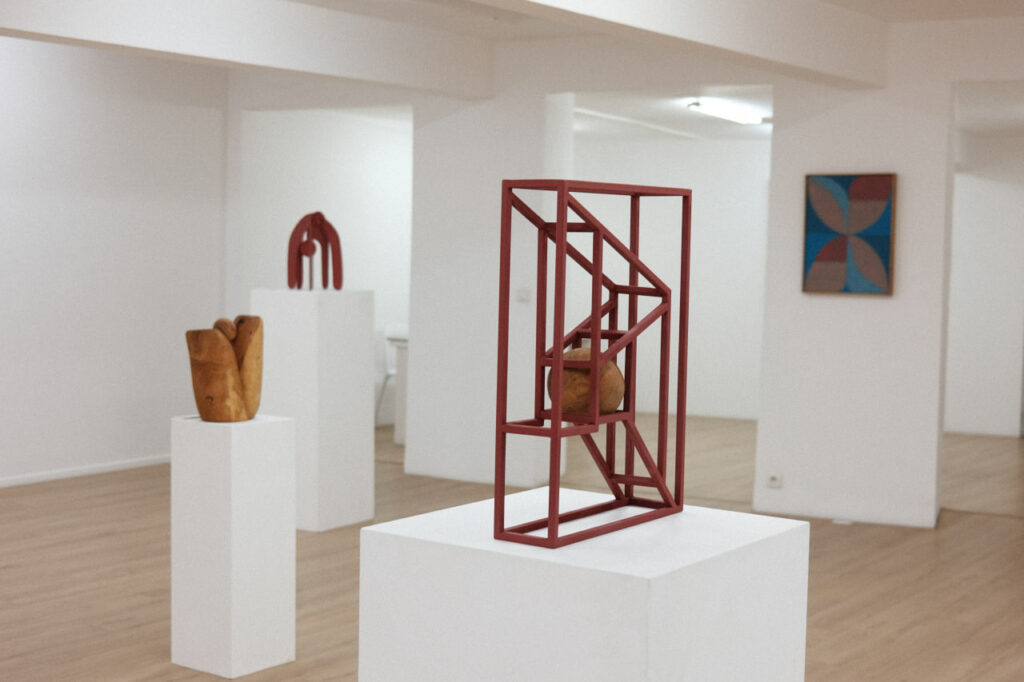
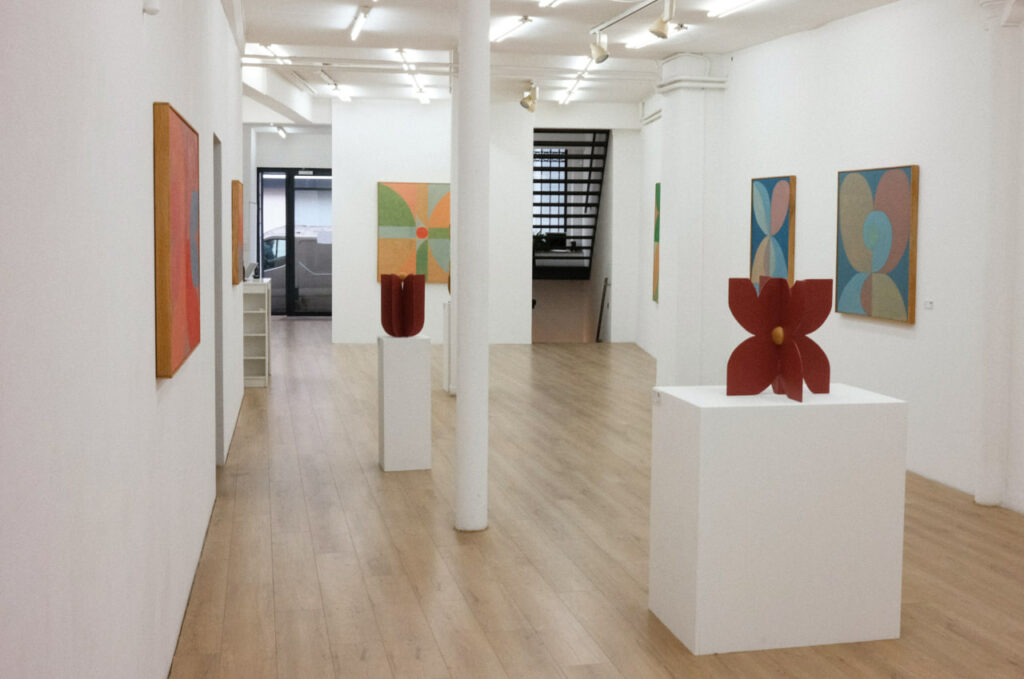
Moving away from overt political narratives, the exhibition turns its attention to the silent persistence of nature within the urban landscape. Organic forms unfold into abstract compositions where leaves, flowers, and architectural structures merge, inviting viewers to reconsider the relationship between the built environment and the living world. Through paintings, sculptures, and a living installation, Flora Urbanica proposes not a conflict between city and nature, but a dialogue—one rooted in resilience, adaptation, and coexistence.
In this conversation with Honargardi, the artists reflect on the evolution of their practice, the poetic language of abstraction, and why moments of stillness may be more necessary than ever.
Flora Urbanica presents nature as a resilient and adaptive force within urban landscapes. How did this theme emerge in your artistic journey, and what inspired you to explore it in this exhibition?
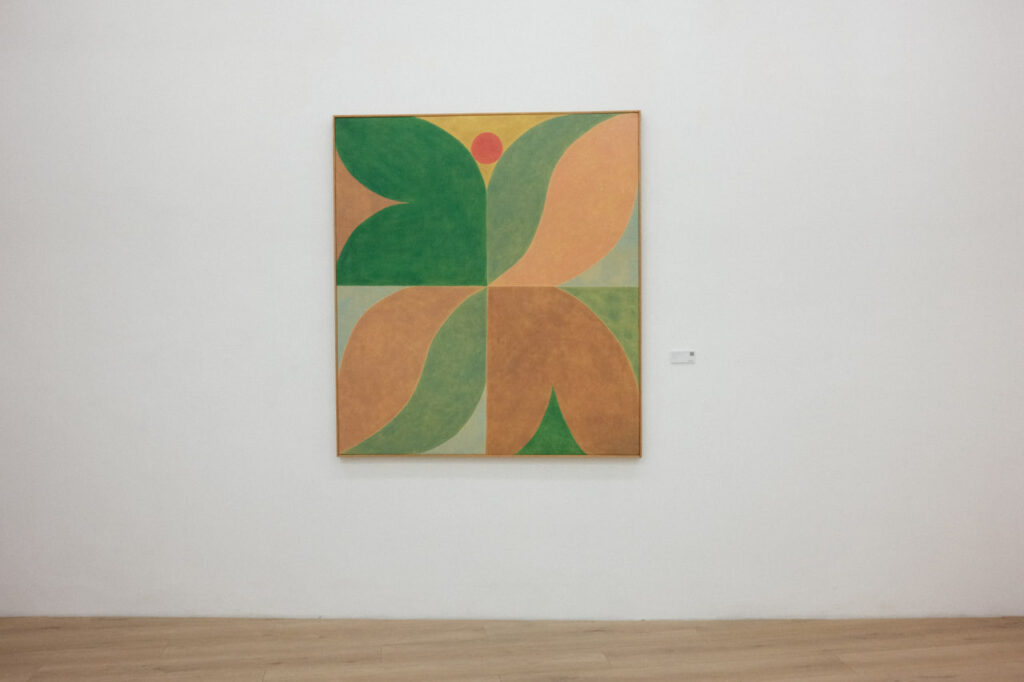
Nature has always been a constant reference in our practice. The inspiration for this show came directly from the city by simply observing how flora adapts and persists in the urban environment. Seeds breaking through concrete cracks, the slow unfurling of a leaf in spring, these moments morph into compositions that seem to shift gradually and kaleidoscopically before our eyes. Fluid lines and earthy textures, sometimes caught within architectural structures, create a sense of being suspended in time, moving to the same cyclical and mystic rhythms as these vaguely recognizable species.
How does Flora Urbanica connect with your previous works that address borders and environmental issues? Do you see this exhibition as a continuation or a new direction?
“Flora Urbanica” continues our focus on environmental issues but takes a more subtle approach, moving away from bold, direct messages. In a way, it’s both a continuation and a new direction, we’ve fully embraced abstraction while still honoring our roots in urban culture and our ongoing exploration of our place in nature.
Your work spans a variety of mediums, from stencils and sculptures to installations and video. What guided your choice of materials and techniques for Flora Urbanica?
Stencils are part of our past, it’s been a decade since our last stencil piece. Since then, we’ve continuously experimented with different techniques, materials, and mediums. We never trained in traditional academic mediums like oil painting, so for this show it felt like an exploration. For us, choosing the right material is essential, it helps shape how a feeling or message is conveyed, making the work more intuitive and immersive
Your practice often involves repurposing materials like barbed wire and fences to make powerful social statements. Did you incorporate found or industrial materials into this exhibition?
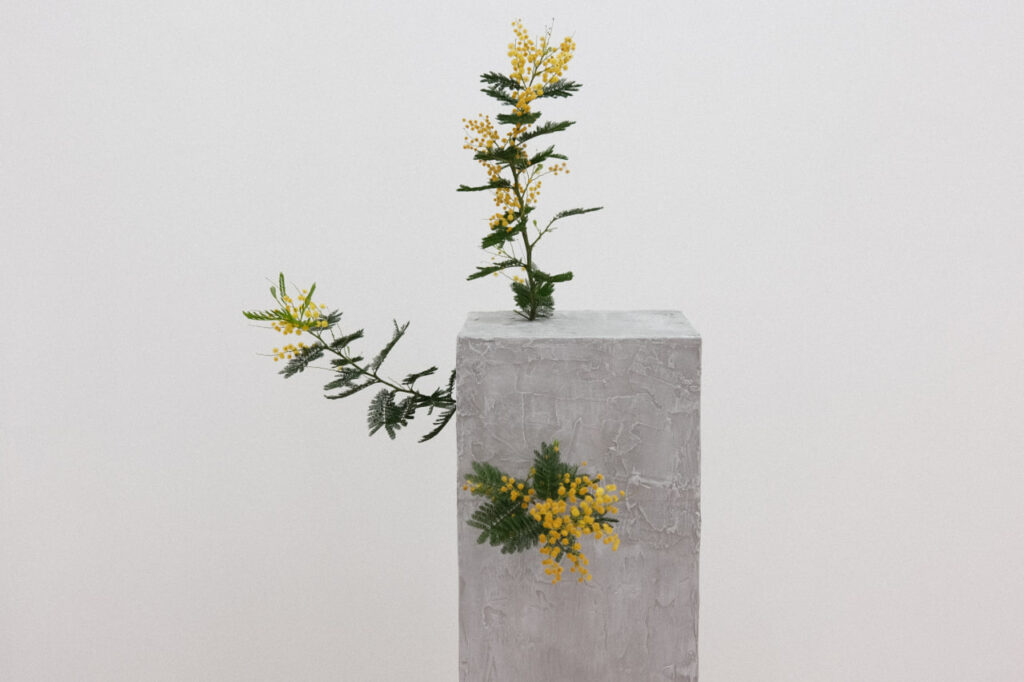
For our installation “Urban Bloom” at Flora Urbanica, we worked with plants, a kind of found/ living material. It’s our first-ever living/ growing installation, and we’ve been getting updates from the gallery, the plants are Growing 🙂
Nature and urbanity are often perceived as opposing forces. How do you balance this contrast in your artistic approach?
The boundaries between nature and the urban environment are fluid, making it impossible, and perhaps unwise to treat them as separate. Rather than opposing forces, we see them as interconnected, constantly shaping and redefining each other. Through this exhibition, we explore this relationship, challenging perceptions of nature’s place while addressing the environmental challenges of our time.
Your work has long been rooted in political and social issues, from migration to environmental crises. How does Flora Urbanica engage with these topics in subtle or unexpected ways?
In this show, the message is more about evoking a feeling, whether a sense of calm or quiet reflection. The works serve as a metaphor for nature’s resilience and adaptability within the cityscape, while also inviting viewers to reflect on their own coexistence with nature, making the experience more personal and introspective
Flora Urbanica seems to mark a shift toward a more poetic and meditative approach to environmental themes. Do you see this direction shaping your future work?
Yes, a meditative approach is something we need in our own lives, and we feel the world could use more moments of calm and pause in these Crazy times.
As our conversation comes to a close, it becomes clear that Flora Urbanica is more than an exhibition about plants or urban landscapes. It marks a thoughtful evolution in Icy & Sot’s practice—one where political engagement gives way to contemplation without losing its critical depth. Rather than confronting the viewer with direct statements, the works invite slower observation, encouraging us to notice the quiet ways nature endures and adapts alongside us.
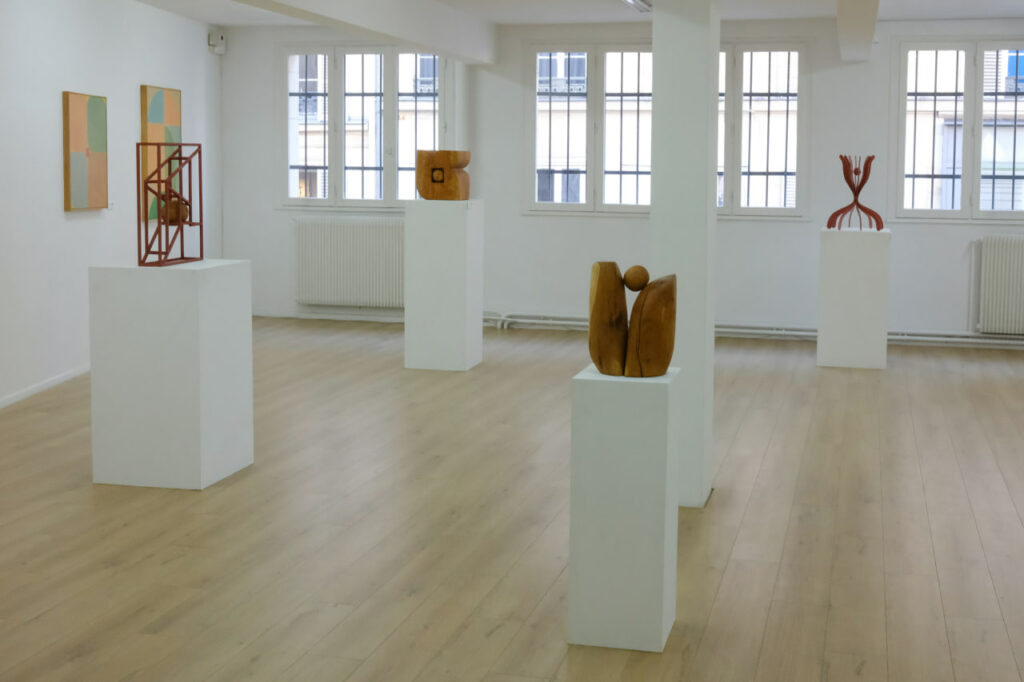
In a world shaped by constant acceleration and environmental uncertainty, Flora Urbanica reminds us that resilience is often silent, growth can be almost imperceptible, and coexistence begins with paying attention. Perhaps that is the exhibition’s most enduring message: even in the heart of the city, nature always finds a way.