
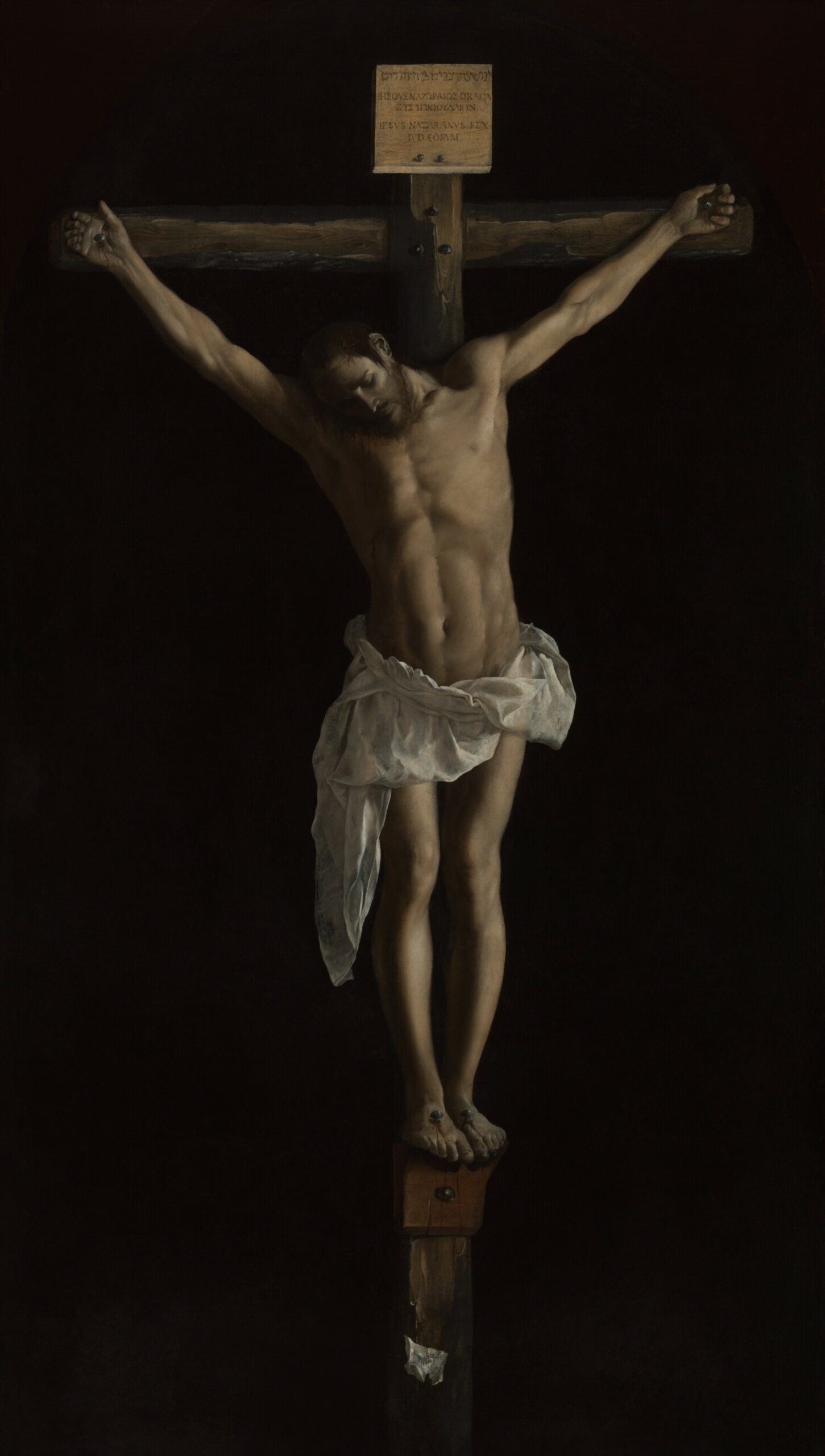
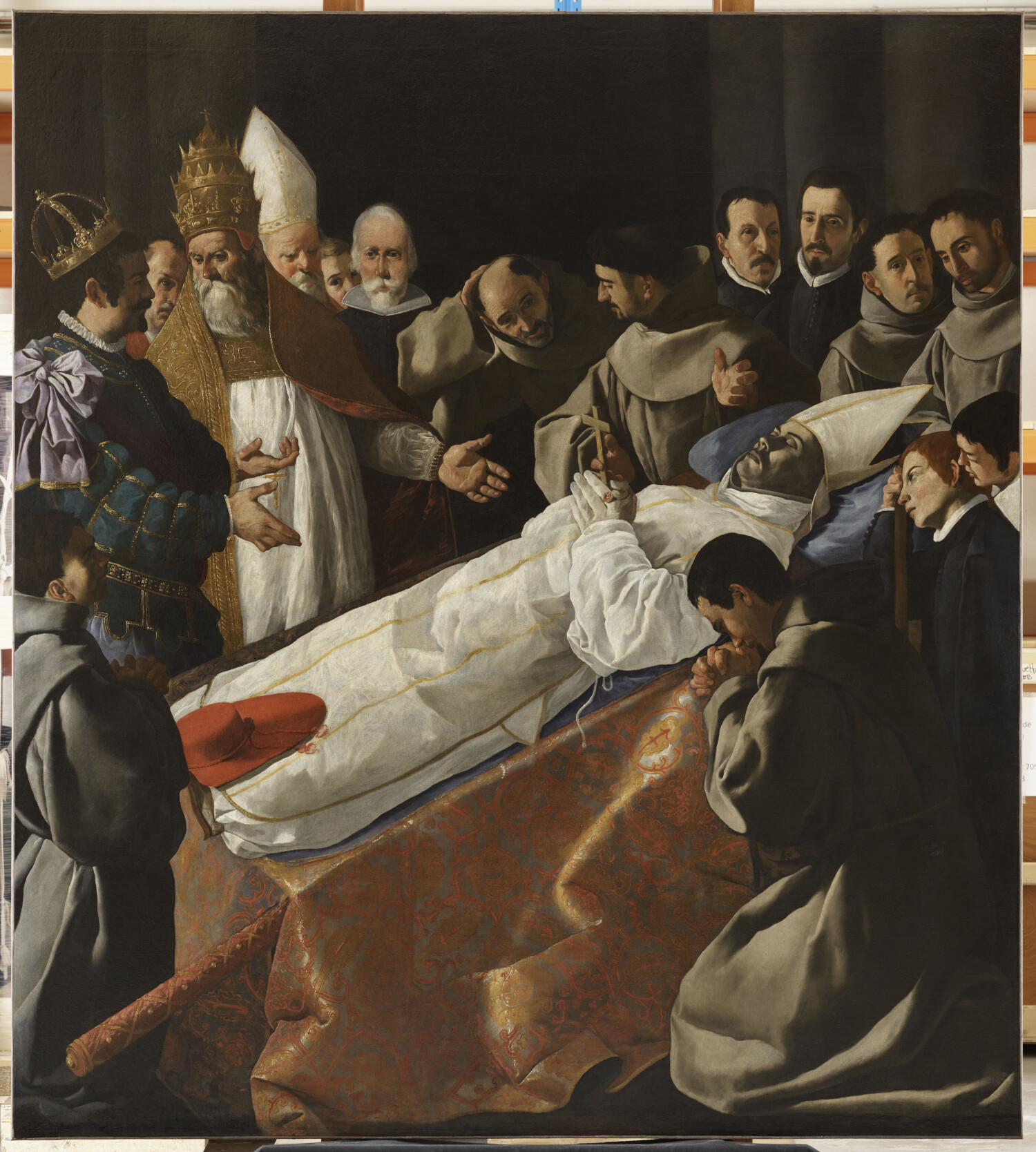
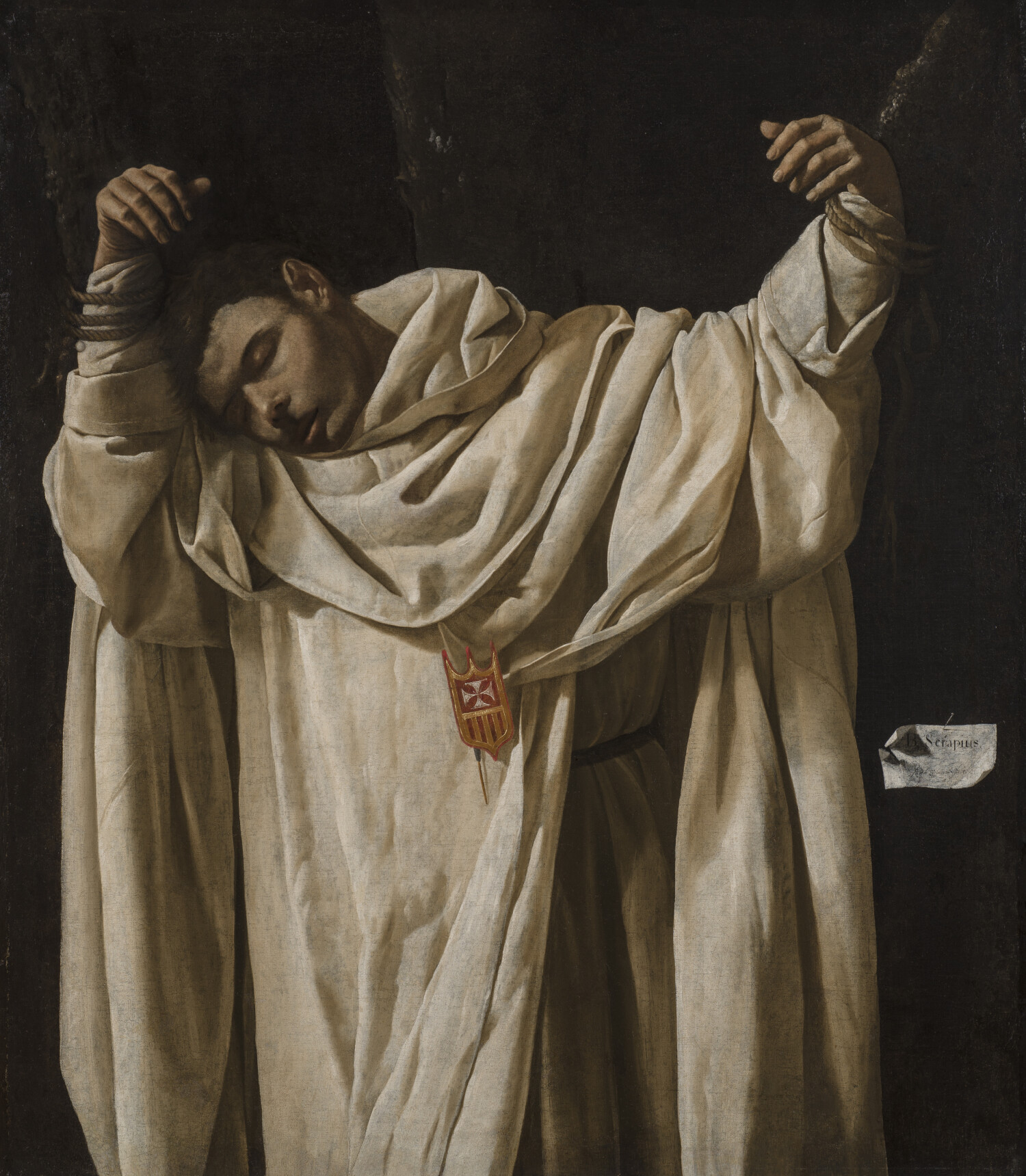
From tomorrow, 7 October 2026, until 25 January 2027, the Louvre presents Zurbarán 1598–1664 in the Hall Napoléon, a retrospective organised jointly with the National Gallery, London, and the Art Institute of Chicago. Francisco de Zurbarán ranks with Velázquez and Murillo among the most important Spanish painters of the seventeenth century, yet he remains the least familiar of the three to a broad public.
The museum’s framing is instructive. Zurbarán was long filed away as a follower of Caravaggio steeped in monastic austerity; only in the twentieth century did he come to be valued as a remarkable colourist with an unmistakable personal style, pairing simplified volumes with striking naturalism. The Louvre says it has not aimed for an exhaustive monograph but for an ambitious selection of first-rate paintings, arranged in seven sections that follow his long career while occasionally breaking chronology to group works together.
The scale is substantial: according to the Louvre’s press materials, the exhibition brings together 65 paintings, 50 of them by Zurbarán himself. Although he has been the subject of several exhibitions over the past decade, this is the first large-scale international presentation of his work since the monograph shown at the Metropolitan Museum of Art and the Grand Palais in 1987–88.
Monks, saints and still lifes
The emphasis falls on the large canvases from monastic commissions in Andalusia that made his name, but portraits and still lifes are given real space, as is the short-lived output of his son, Juan de Zurbarán (1620–1649) — a rare opportunity to see the son’s work beside the father’s. The image the Louvre has chosen to lead with, Saint Casilda (c. 1635, Museo Nacional Thyssen-Bornemisza, Madrid), says a great deal: a single figure in sumptuous dress set against darkness, half court portrait, half devotional image.
An epilogue in modernism
The most telling decision comes at the end. A small group of works from the late nineteenth and early twentieth centuries — by Édouard Manet, Pablo Picasso and Juan Gris — closes the exhibition, pointing to Zurbarán’s importance for the French avant-gardes. The pared-down forms and intense light that once read as piety now read, to modern eyes, as formal daring.
A Spanish autumn
The retrospective shares its space, and a jointly designed scenography, with Sculpter la couleur, devoted to masterpieces from the Museo Nacional de Escultura in Valladolid; a single ticket covers both. Around them the Louvre has built a full Spanish season: an opening concert by Ensemble Cantoria under Jorge Losana on 7 October, a cinema carte blanche to Rossy de Palma, lectures, and a “Grand Week-end Espagne” in December. The exhibition is curated by Charlotte Chastel-Rousseau, chief curator in the Louvre’s Department of Paintings, with Francesca Whitlum-Cooper and Daniel Sobrino Ralston of the National Gallery and Rebecca Long of the Art Institute of Chicago.
That pairing of painted and sculpted devotion is the season’s quiet thesis. In seventeenth-century Spain the two arts competed to make the sacred tangible; placed side by side, Zurbarán’s almost sculptural figures may finally be seen for what they were — images made not only to be looked at, but to be felt.
Zurbarán 1598–1664 — Musée du Louvre, Hall Napoléon, 7 October 2026 – 25 January 2027.
Source: Musée du Louvre, official exhibition page
Press materials: Musée du Louvre press room
This article was prepared with AI assistance and reviewed by the Honargardi editorial team.