
An illuminated Renaissance book of hours linked to the Aragonese court of Naples has entered Italy’s public collections through a donation formalised in Milan on 18 November 2026, the Italian Ministry of Culture announced. The manuscript, known as the Book of Hours of Ferrante d’Aragona, will be kept at the Biblioteca Nazionale in the Palazzo Reale in Naples.
The ministry puts the volume’s estimated value at around one million euros. It bases that figure on the exceptional decoration, the manuscript’s excellent state of preservation, its presumed provenance from the dispersed library of the Aragonese house, and comparison with auction prices for works of similar quality. Culture minister Alessandro Giuli described the gift as a particularly rare event and one of the most important acts of patronage in republican Italy.
What the manuscript contains
According to the ministry, the codex dates from the first years of the 16th century. It contains numerous full-page miniatures, sumptuous ornamental borders, four purple leaves and silk interleaves. Its binding, in red velvet and gilded silver, completes an object that the ministry describes as intended for a patron of the very highest rank.
Studies, the ministry says, have traced the codex to the milieu of the Aragonese court in Naples and identified in its miniatures the influence of the Roman school, inspired by models from Michelangelo and Raphael. Its calendar includes Saints Athanasius, Januarius and Severus, and some of its prayers are in Spanish — details that strengthen the link with Naples. The dating and the iconography, the ministry adds, suggest a possible commission by Ferrante d’Aragona: the commission is presented as a hypothesis, not an established fact.
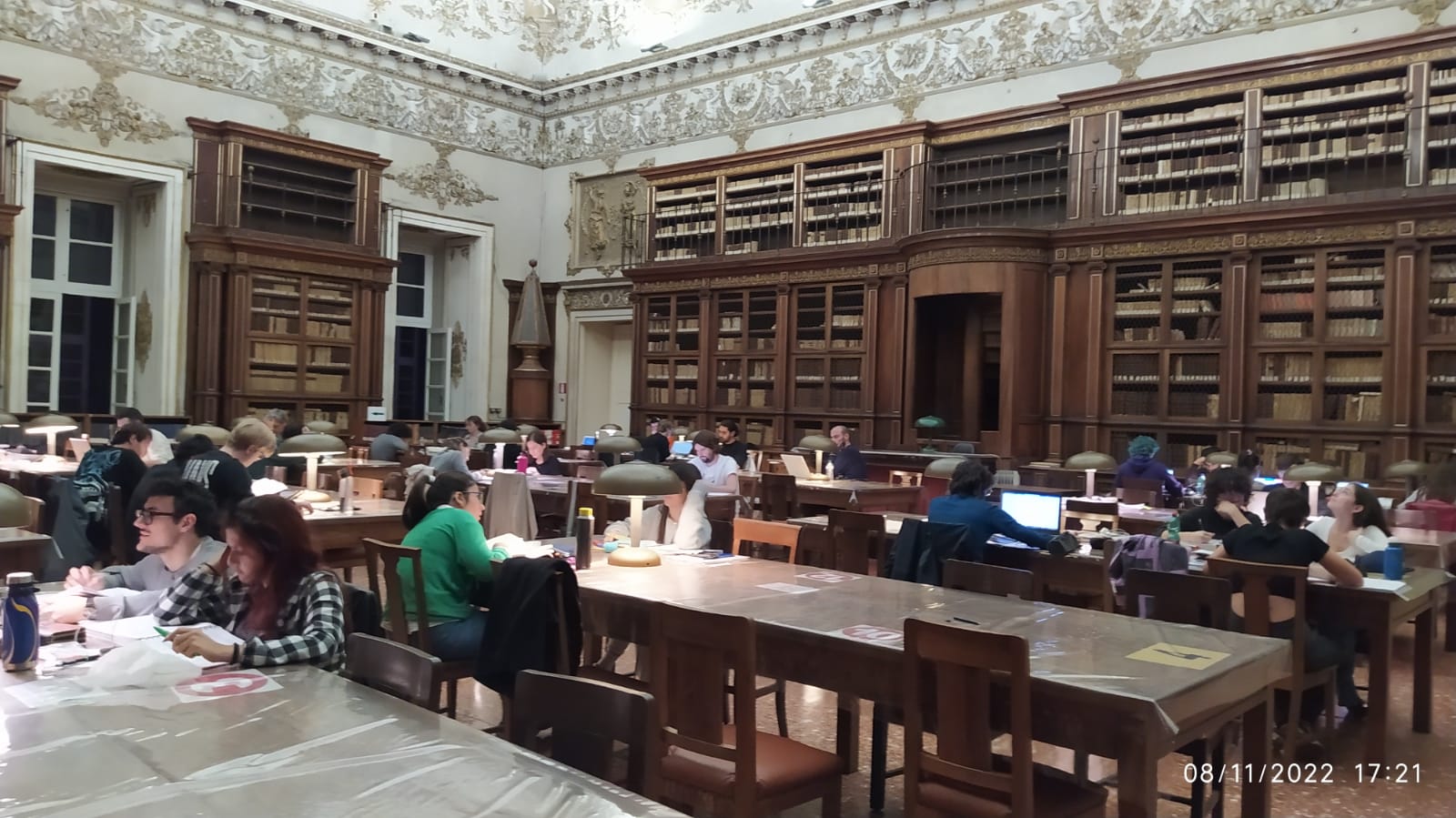
An anonymous donor
The donor has chosen to remain anonymous. Paola Passarelli, the ministry’s director general for libraries and cultural institutions, said the donation shows the value of sharing, and relayed the donor’s own words: her family had had the privilege of keeping the book, and it was now right for it to return to the community.
Why it matters
For the minister, the manuscript bears witness to the extraordinary artistic flowering of Naples at the beginning of the 16th century. Its transfer to a public library in Naples places it in the city to which, by the ministry’s account, its calendar and its Spanish-language prayers already tie it — and, if the presumed Aragonese provenance holds, returns to public hands an object from the dispersed library of the Aragonese house.
Practical information: the manuscript will be kept at the Biblioteca Nazionale, Palazzo Reale, Naples. The ministry’s announcement gives no date for public display.
Sources: Ministero della Cultura, press release of 18 November 2026; Finestre sull’Arte, 19 November 2026.
This article was written with AI assistance, supervised by Honargardi’s editorial team.