
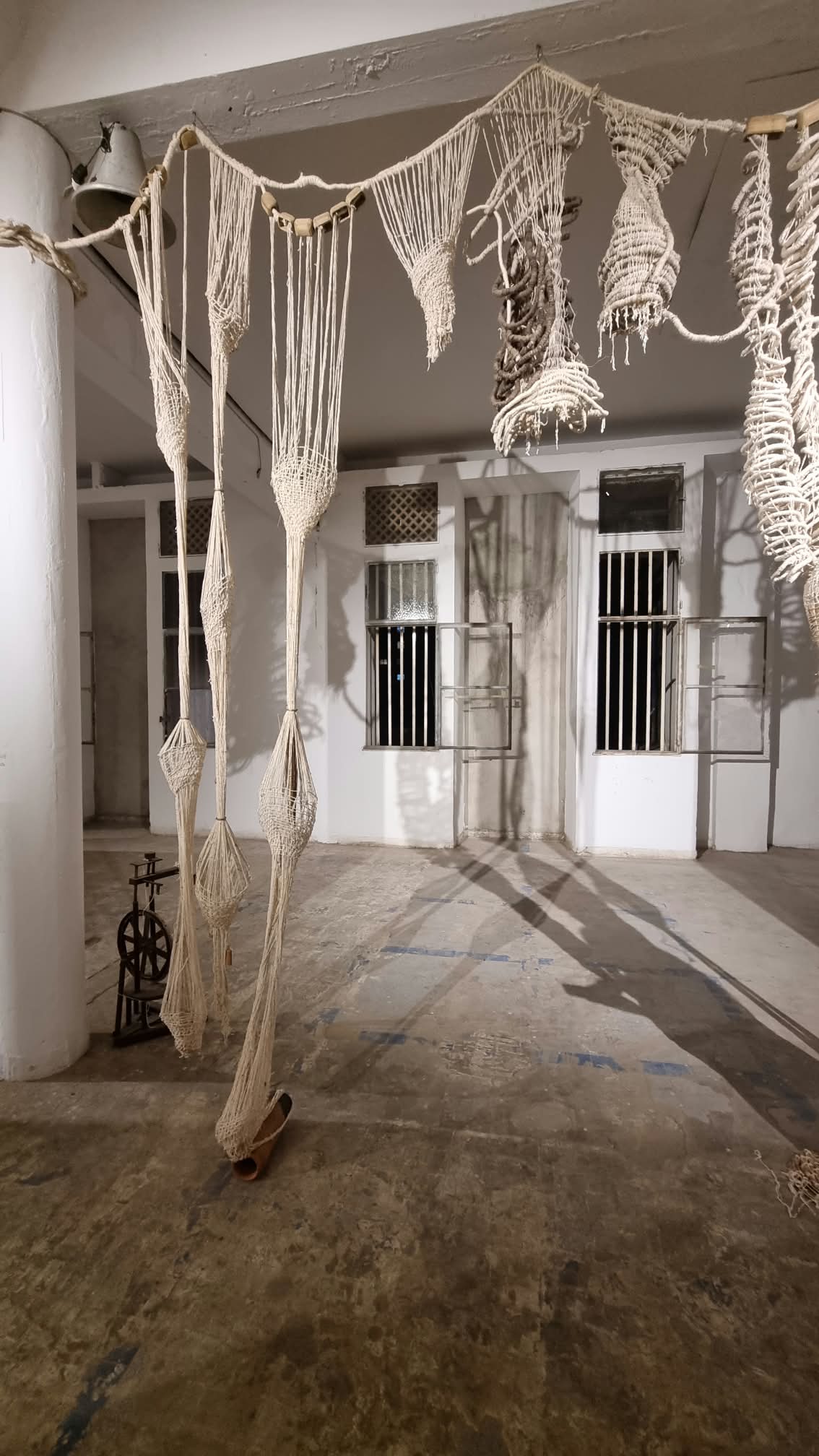
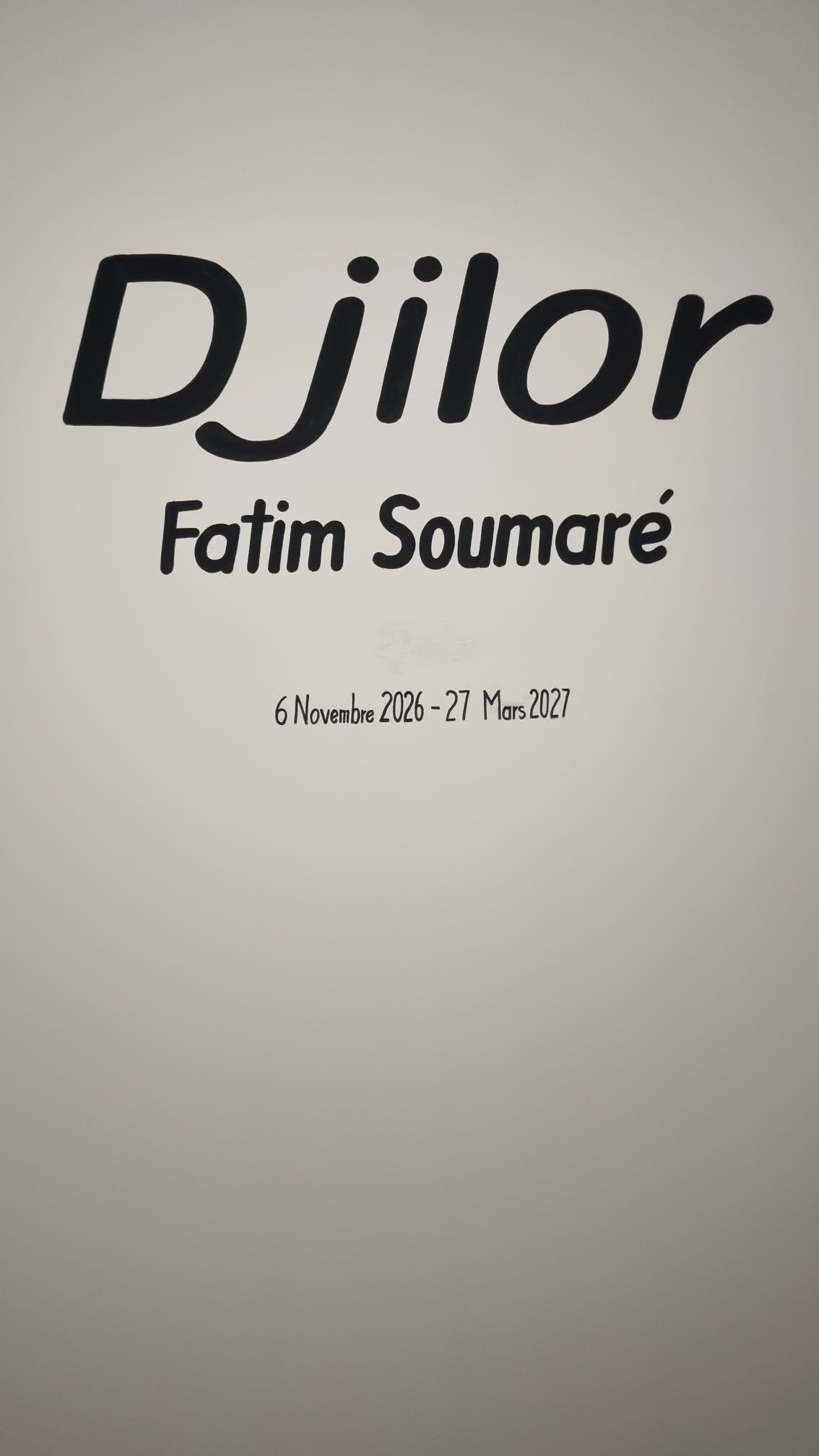
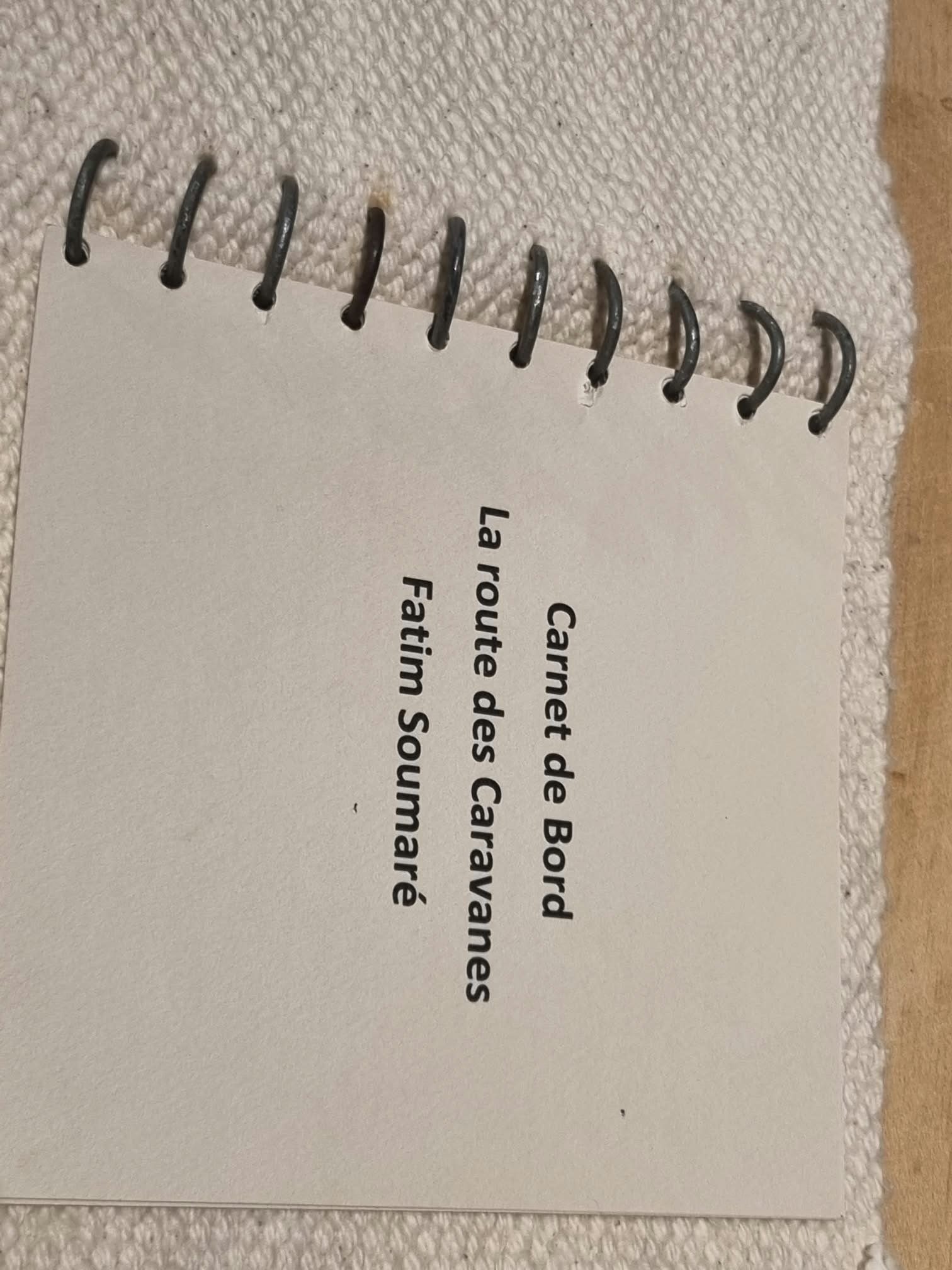
On Wednesday 18 November 2026, the eve of the opening of the 16th Dakar Biennale of Contemporary African Art (Dak’Art), the Dakar gallery Selebe Yoon held the vernissage of several OFF exhibitions. One of them is “Djilor”, the first solo exhibition by the Senegalese artist Fatim Soumaré at the gallery: seven new monumental textile works installed between the building’s columns. The photographs in this article were taken on 18 November 2026 by Marion Inizan.
The Biennale opens on 19 November
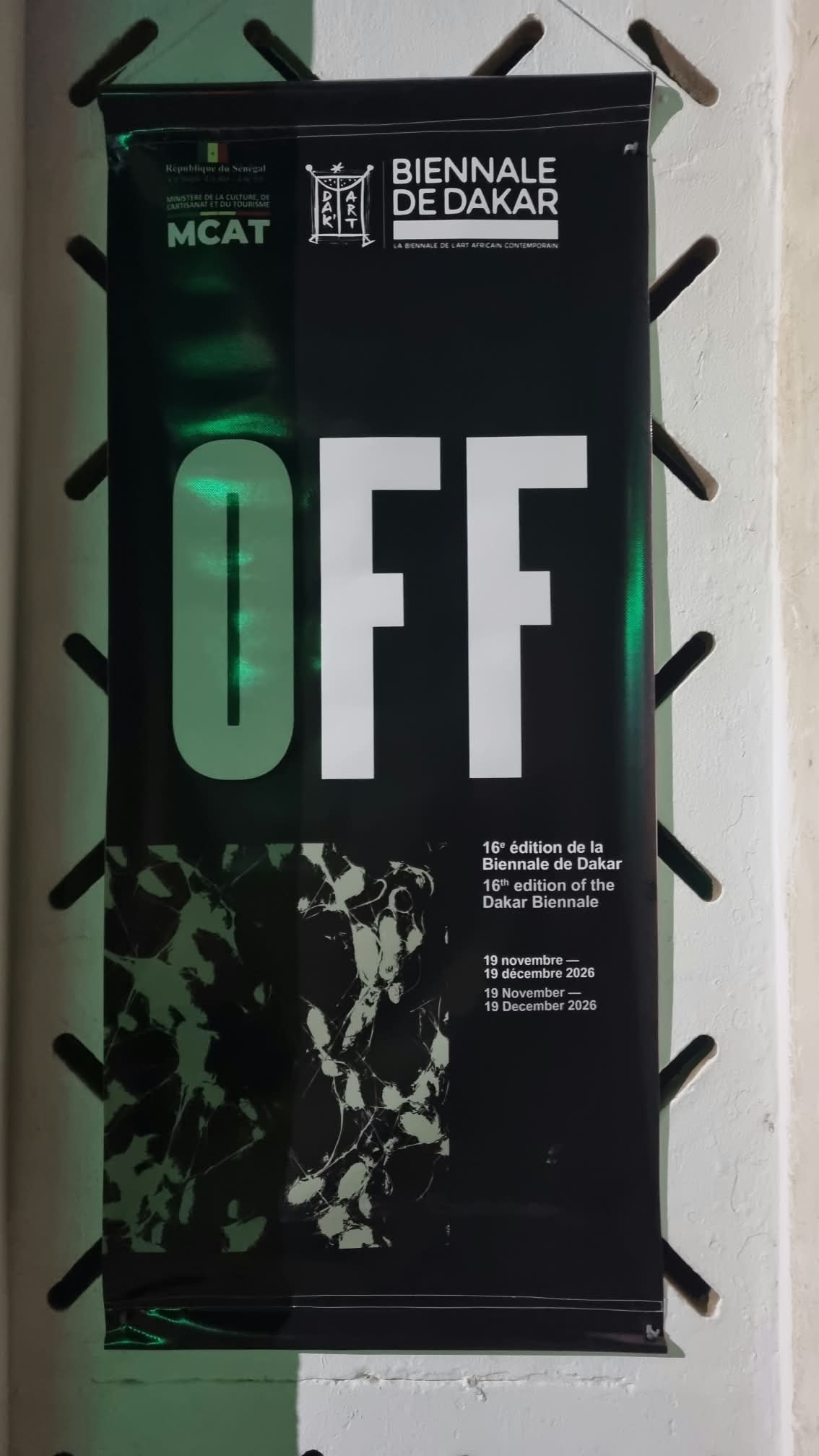
The 16th edition runs from 19 November to 19 December 2026 under the artistic direction of Morad Montazami, an art historian and curator who founded the platform Zamân Books & Curating after working at Tate Modern. Its theme, “(Anti)fragilité : arts de la réparation et stratégies du contrecoup”, treats fragility as a starting point for creation, care and repair. The curatorial project is built around five guiding threads: Re-Greening the Former Courthouse; The Arts of Maroonage; Being and Creating Between Care and Repair; Sharing Knowledge; and Connecting Continents.
The official selection, unveiled on 24 September, brings together 75 artistic proposals, 54 for the international exhibition and 21 for the Design section, plus the Grand Témoin Faouzi Laatiris and a carte blanche for Serigne Mbaye Camara. The Democratic Republic of the Congo is guest of honour.
Alongside this official programme (the IN), the OFF brings together events run by independent venues in Dakar, in other regions of Senegal and in the diaspora. On the Biennale’s programme page, Selebe Yoon appears with five OFF entries whose vernissage is on 18 November at 6 pm: “80-90 Déviation” (Issa Samb, El Hadji Sy and Kan Sy), “Nitte moy Garabam” (Pap Souleye Fall), “Djilor” (Fatim Soumaré), “Lumen” (Naomi Lulendo) and a fashion show by Alioune Diouf.
“Djilor”: seven textile works
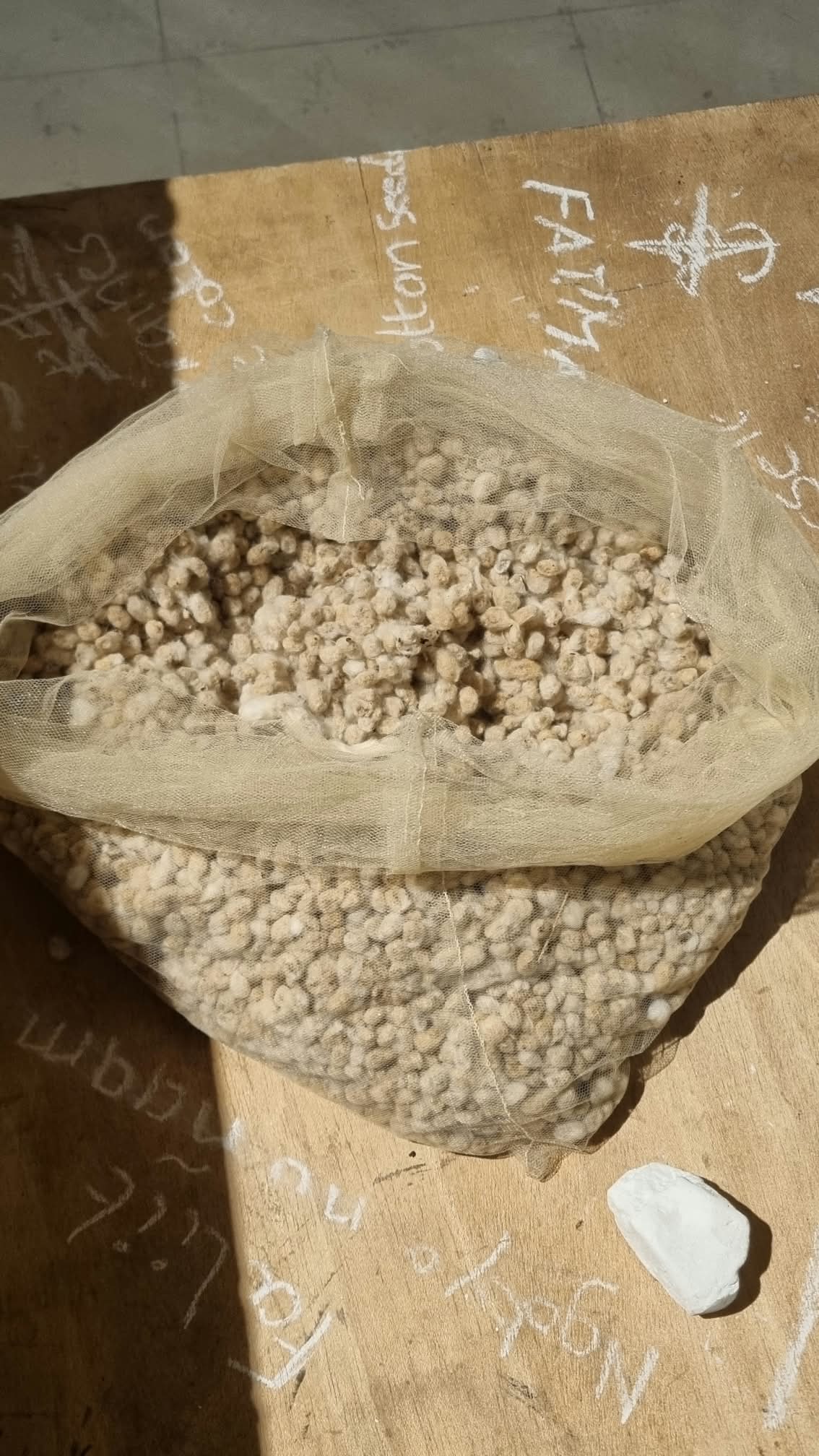
According to the gallery, the seven works are made of cotton and other materials and extend horizontally into vine-like forms, like an interwoven map; their arrangement suggests a series of doors or thresholds. They incorporate objects gathered on a journey from Cape Verde to the Maghreb and Brazil: terracotta beads and shells, metal spinning wheels and anchors used by fishermen in Ndangane (Senegal), bronze spouts from Ouagadougou (Burkina Faso), old manillas recovered at the port of Dakar, sand from Gabès (Tunisia), fish scales from Itaparica (Brazil) and wool offcuts from Amazigh carpets in Khénifra (Morocco).
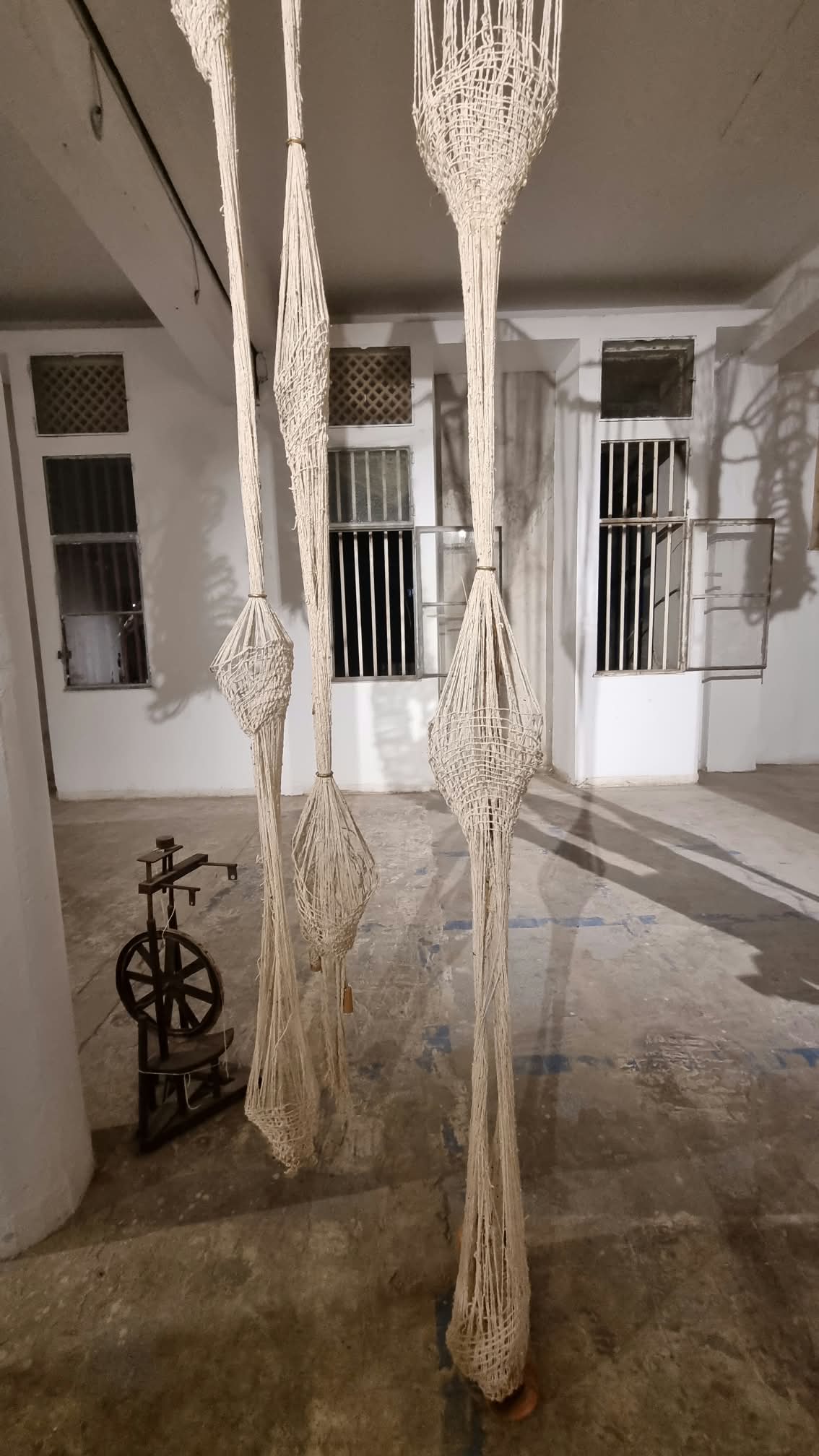
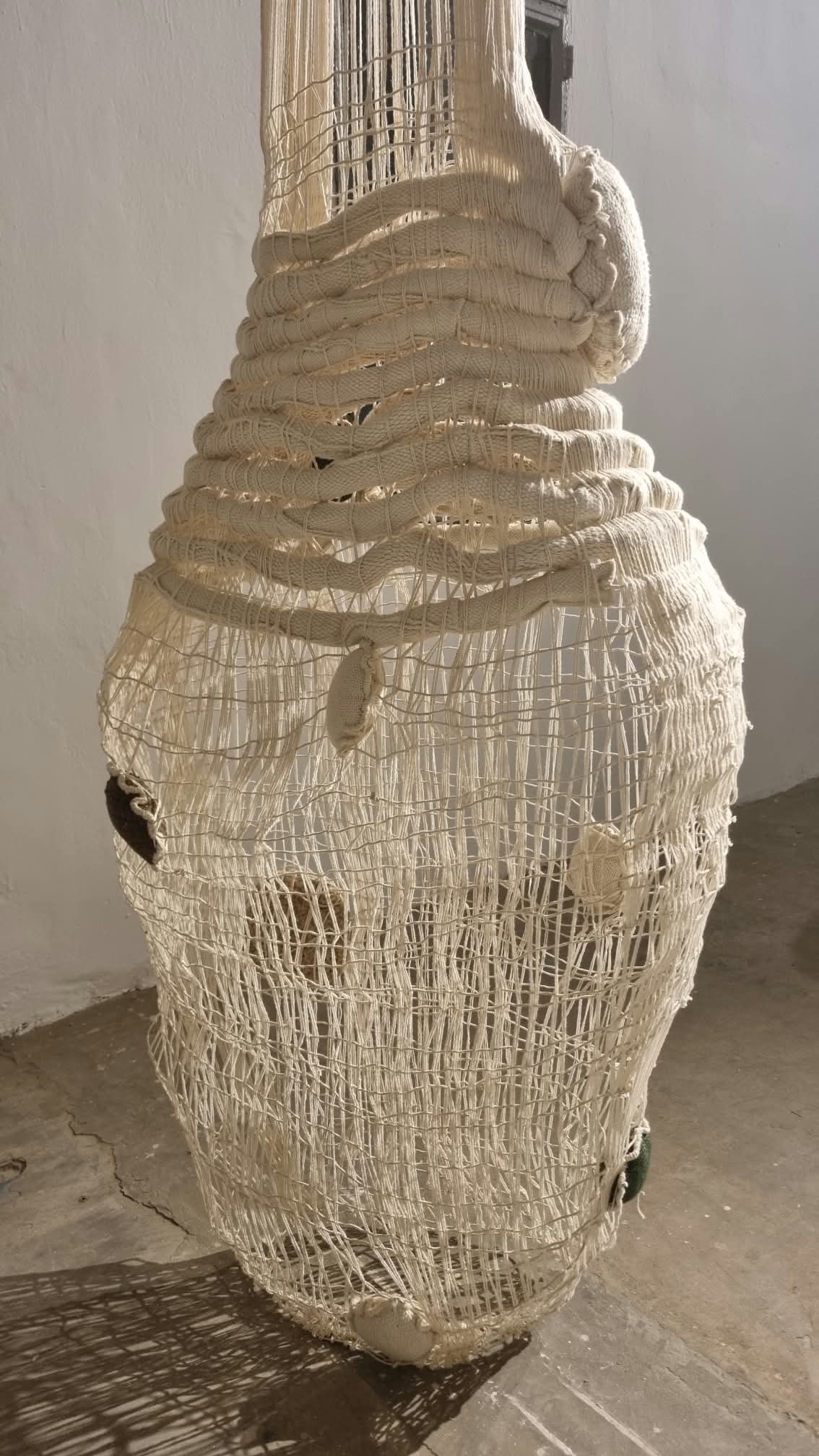
The title refers to Djilor, a village in the Siin delta in western Senegal where the artist lives and works. The gallery explains that the Serer name suggests withdrawing or choosing another place for oneself, and recounts an oral tradition in which the village’s founder was guided by hand-spun thread given to him by a woman named Ndé Thioro.
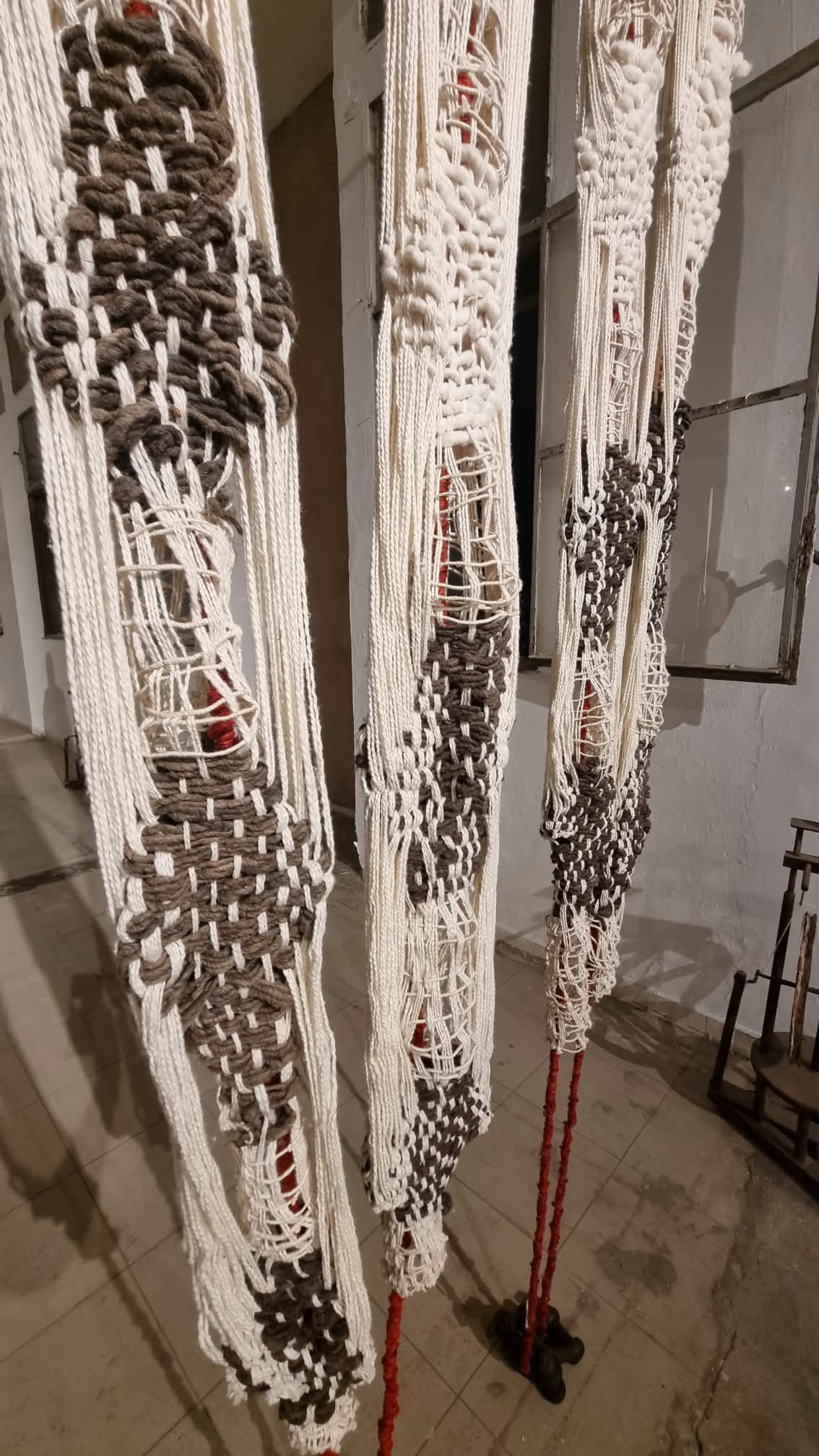
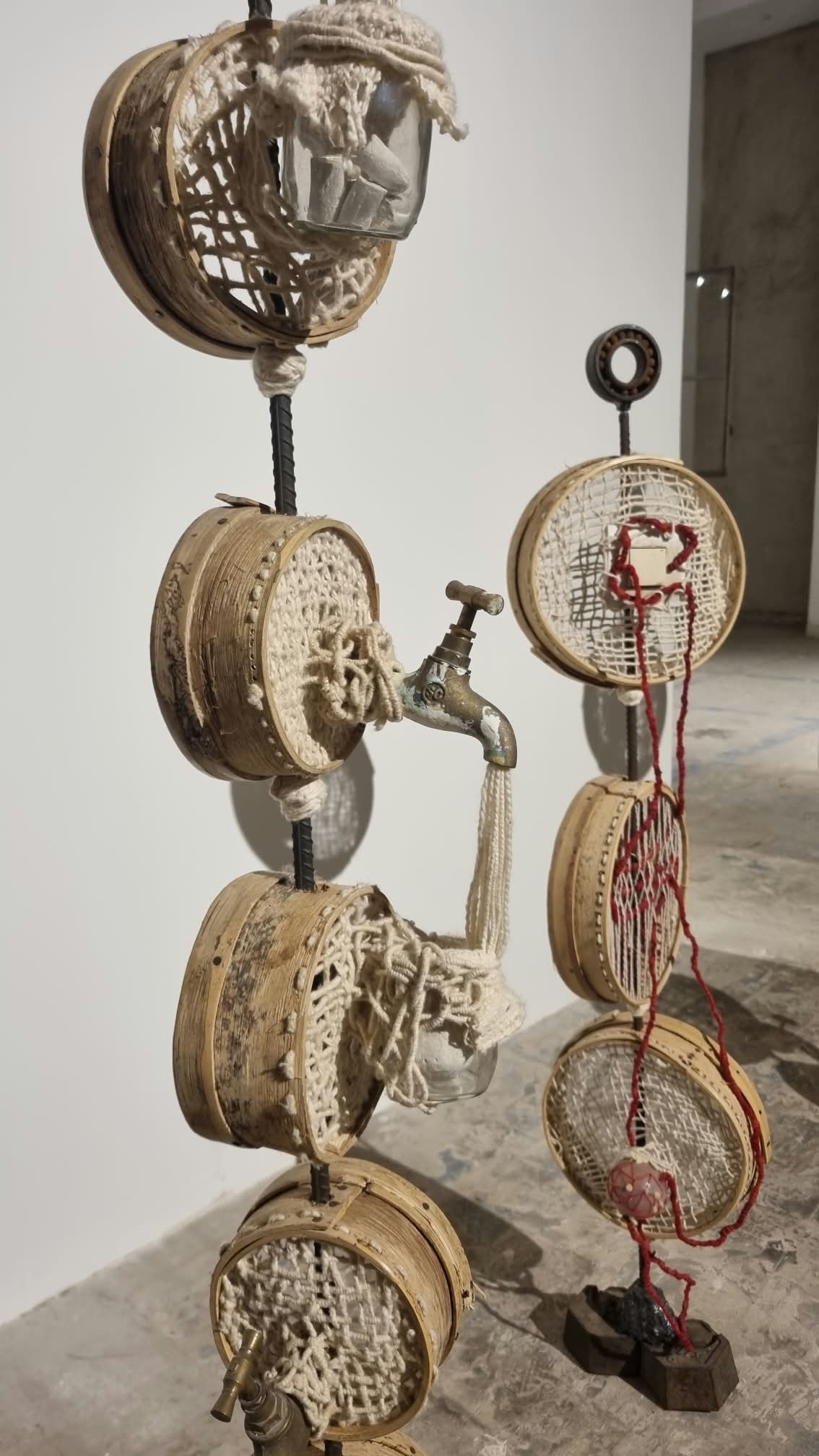
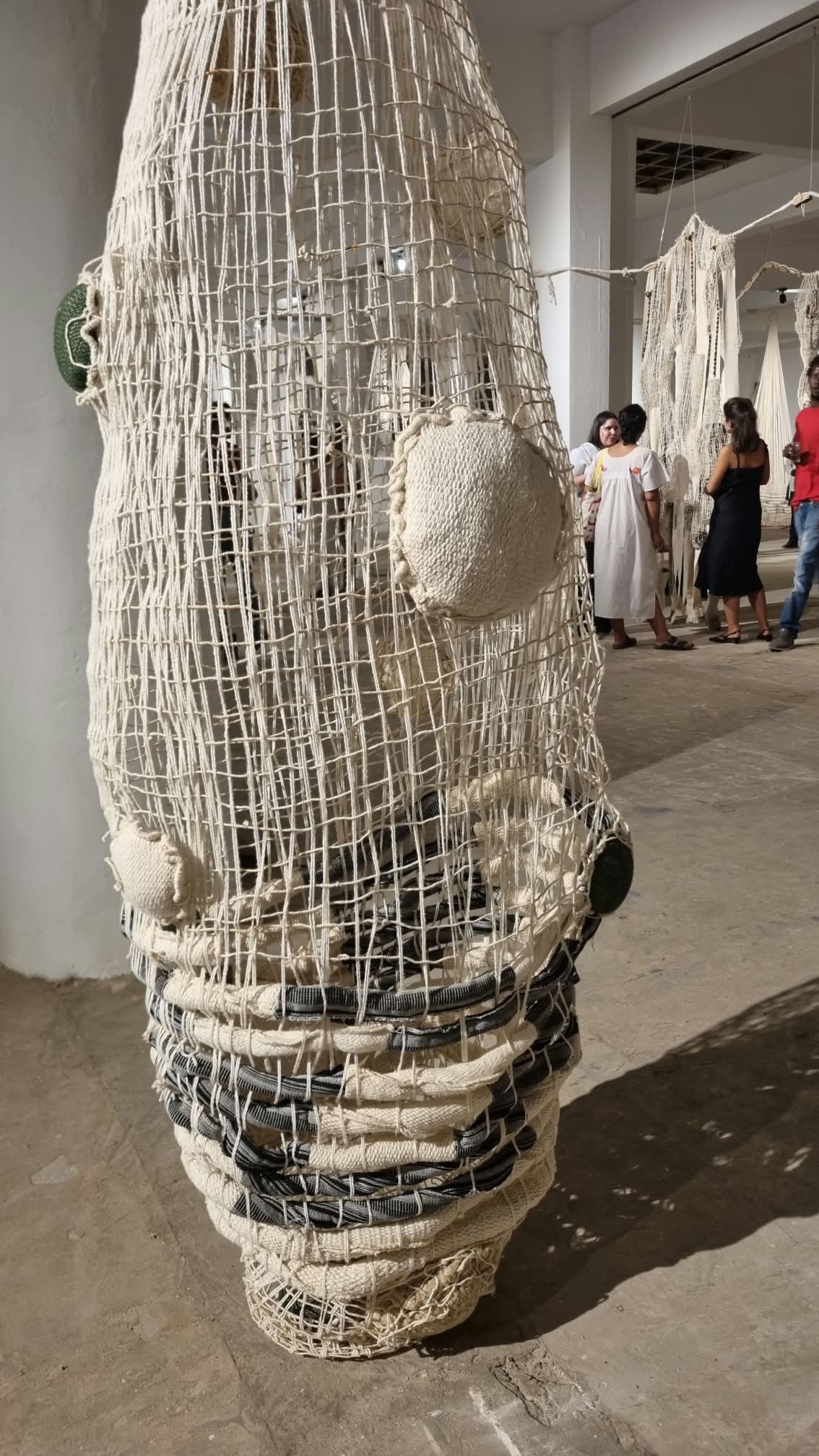
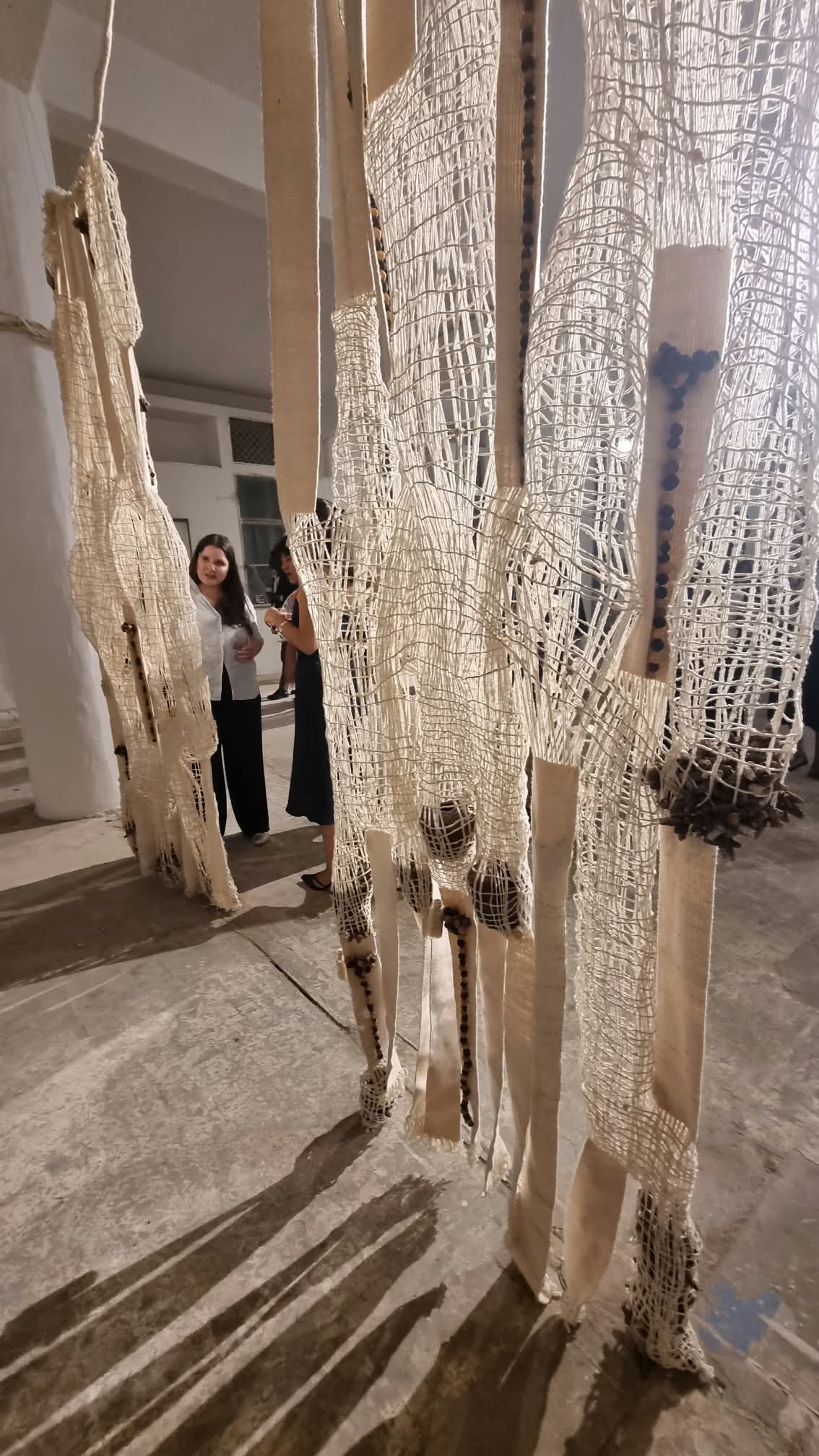
Fatim Soumaré, born in 1989, is a Senegalese visual artist and researcher based in the Sine-Saloum region. She learned textile craft from her mother, a traditional dyer, and studies the history of cotton, from its precolonial routes across the continent to its industrial exploitation. In 2021 she founded Falé, a workshop-laboratory and collective of about 200 artisanal spinners in Fatick.
Practical information
“Djilor” is at Selebe Yoon, Crossroad, Rue Parchappe and Rue Salva, Dakar, Tuesday to Saturday, 11 am to 6 pm. The gallery gives 6 November 2026 to 27 March 2027 as the dates of the exhibition; the Biennale’s OFF programme lists a different run, from 18 November to 30 January 2027.
Photographs: Marion Inizan, 18 November 2026.
Sources
- Dakar Biennale 2026 press kit (24 September 2026) and the official website, biennaledakar.org (edition and programme pages)
- Selebe Yoon: exhibition page “Fatim Soumaré: Djilor”
- Selebe Yoon: artist page for Fatim Soumaré