
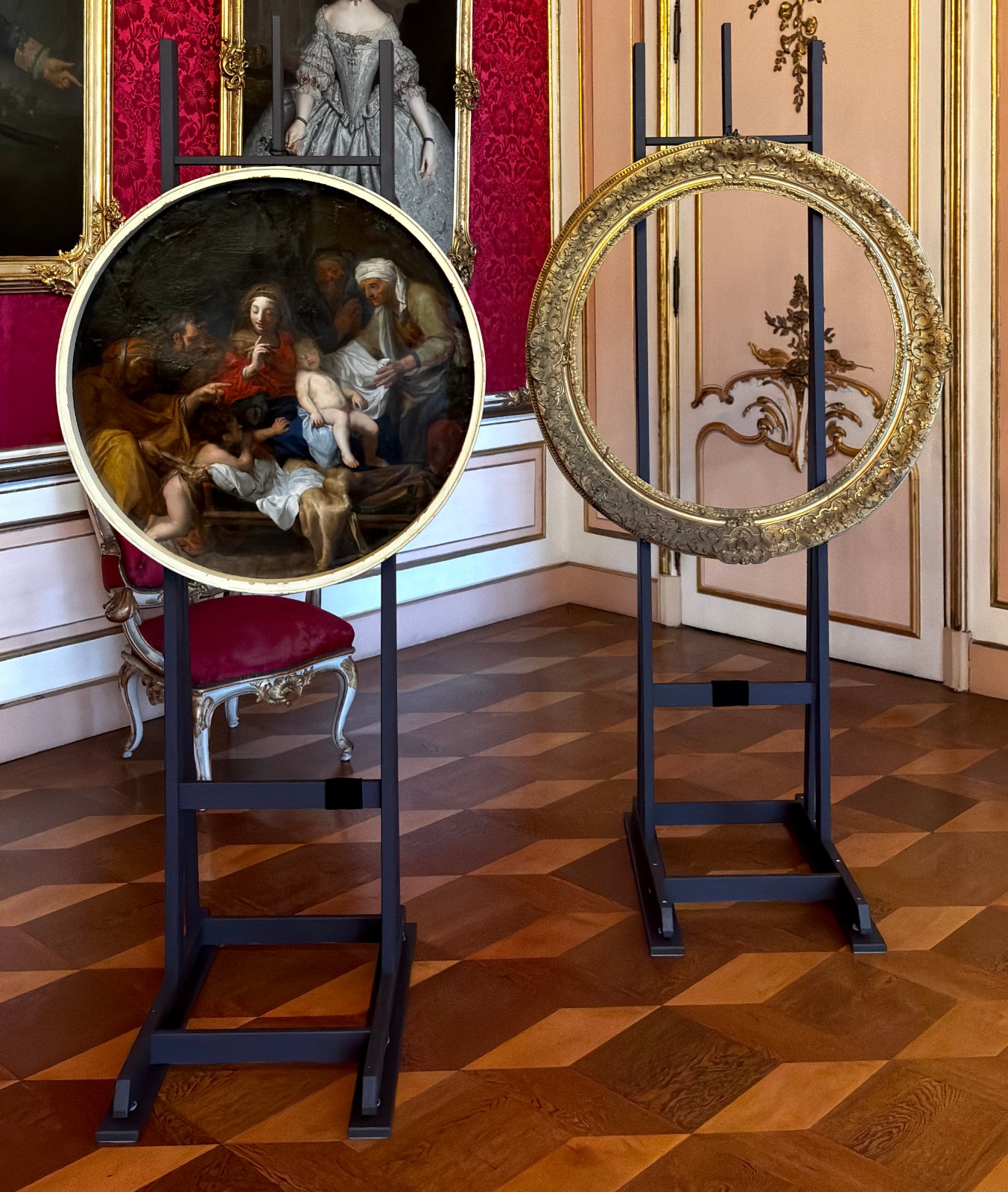
A painting by Charles Le Brun that disappeared from the Prussian royal collections after the Second World War is back in Potsdam. On 18 November 2026 the Prussian Palaces and Gardens Foundation Berlin-Brandenburg (SPSG) took possession of Le Brun’s “Holy Family”, painted around 1655, in the presence of Germany’s Minister of State for Culture and the Media, Wolfram Weimer, according to a press release from his office. The foundation’s own release says the return was made possible by the Ernst von Siemens Kunststiftung and the Association of Friends of the Prussian Palaces and Gardens.
The picture matters beyond its homecoming. Le Brun, a protégé of Cardinal Mazarin and court painter to Louis XIV, is, in the words of the SPSG’s director general Christoph Martin Vogtherr in the release, one of the most important painters of the Baroque, yet barely represented in German museums. The return also reopens a question of authorship, because a closely related, signed and dated version of the same scene hangs in the Louvre.
From Frederick the Great’s palace to a Berlin saleroom
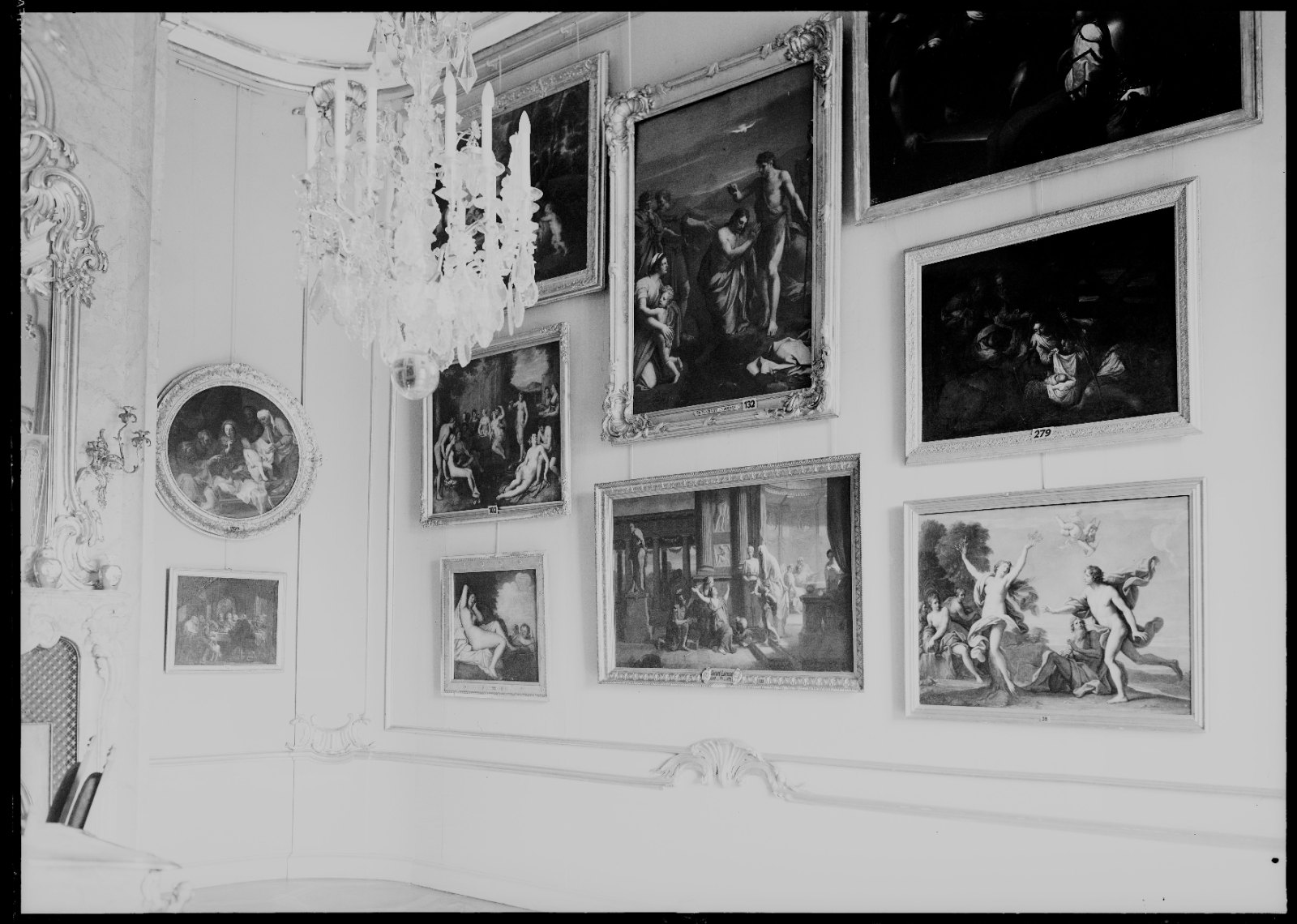
According to the SPSG, the painting was among the most important purchases that the Prussian king Frederick II, “the Great”, made for his newly built Neues Palais in Potsdam. He had the depiction of the sleeping Christ Child with the Holy Family hung in a cabinet in one of the palace’s guest apartments.
Like many paintings from the Neues Palais, it was evacuated to Rheinsberg Palace in 1942, where records place it until 30 July 1945. After that its trail goes cold. The foundation says the work resurfaced at a Berlin auction house in 2021, and that its Canadian buyer then contacted the SPSG. Long negotiations followed, in which the Ernst von Siemens Kunststiftung took part; an expert report financed by the Kunststiftung confirmed that this was indeed the lost Le Brun, and an agreement was finally reached with the Canadian owner. The release does not disclose its terms. ARTnews, citing the foundation, gives the same outline of the painting’s wartime evacuation, its disappearance after July 1945 and its reappearance at auction in Berlin.
In the federal government’s release, Weimer describes the return as a sensation for cultural history and thanks the two supporting bodies. Martin Hoernes, secretary general of the Ernst von Siemens Kunststiftung, says in the SPSG release that recovering museum losses from the period immediately after the end of the war currently define the foundation’s work.
A squirrel, and two versions of one scene
According to the SPSG, one detail reveals the painting’s original patron. The infant John the Baptist holds a squirrel in the crook of his arm, an animal that, the SPSG notes, is not part of the usual iconography of the Holy Family but is the heraldic emblem of Nicolas Fouquet, Louis XIV’s finance minister until his arrest in 1661. Le Brun was in charge of the decoration of Fouquet’s château at Vaux-le-Vicomte from 1658, and the foundation therefore considers a commission from Fouquet very likely.
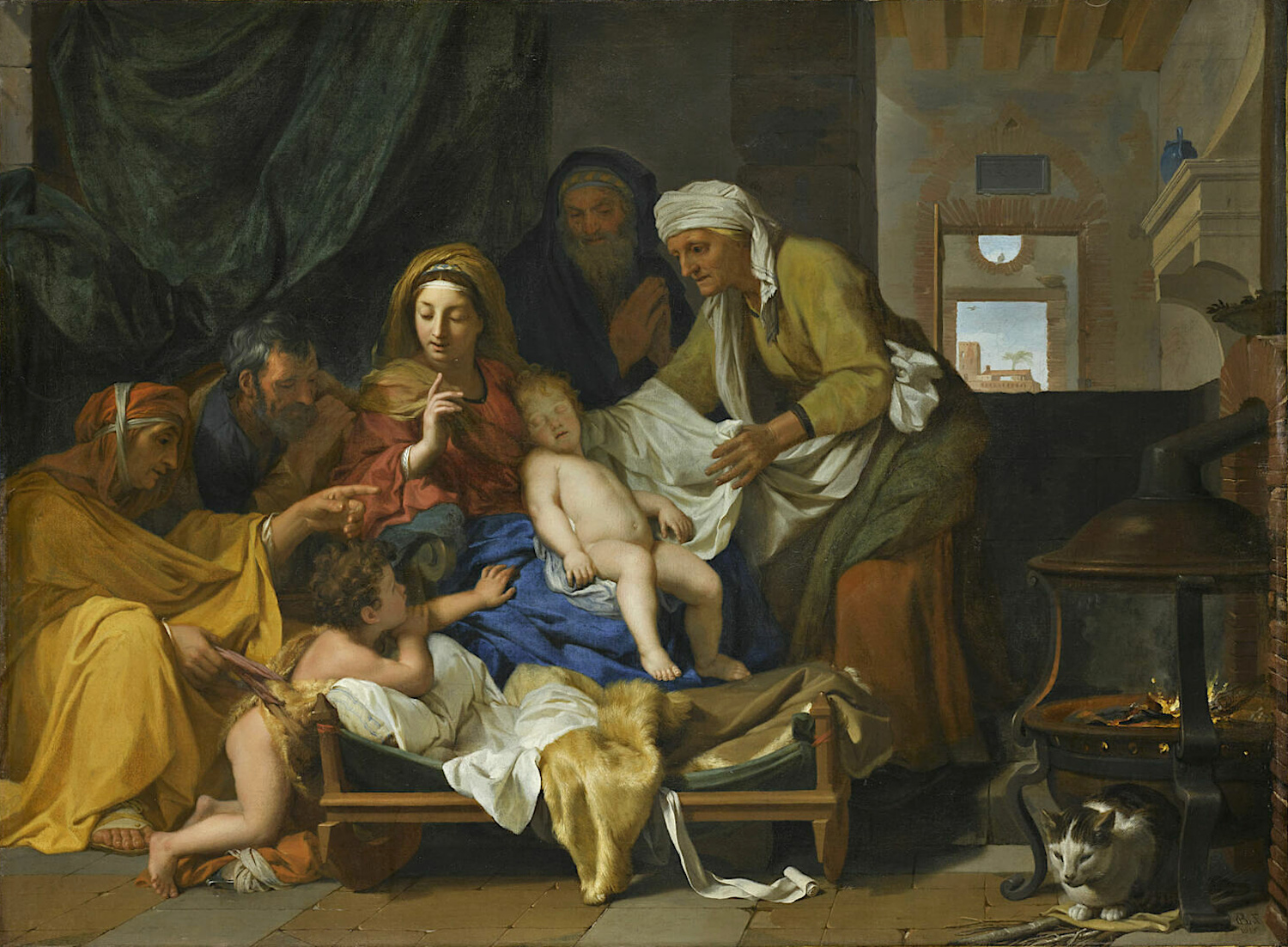
The Louvre’s picture, Le Sommeil de l’Enfant Jésus ou Le Silence, shows the same family gathered around the sleeping child, but in a rectangular format of 87 × 118 cm and a larger domestic setting, and without the squirrel. It is signed and dated 1655. As the SPSG notes, it is regarded as one of Le Brun’s most significant works and had until now been seen as the only version by his own hand. The Potsdam tondo was generally regarded as a workshop replica, possibly with Le Brun’s participation; the foundation now suggests that its quality could indicate a first version, painted before the Louvre canvas. That question, it says, can at last be examined on the original. Hoernes adds that the work is to be studied with the latest methods to reconstruct its authorship and history.
Restoration first, then the writing cabinet
Visitors will have to wait. The SPSG release states that the painting and its frame were presented at a press event on 18 November before being taken to the foundation’s restoration studios. Recent photographs and a conservation report drawn up in Canada show that the canvas was taken off its stretcher and folded in the course of its theft from Rheinsberg Palace, so extensive restoration is expected. Afterwards it is to return to the place Frederick II chose for it, the writing cabinet of the Upper Princes’ Quarters in the Neues Palais, in its historical gilded frame decorated with flowers, foliage and strapwork, which survived in Potsdam. No date has been announced. Weimer’s statement, quoted in both releases, speaks of the painting already being back in its historic place for visitors to admire; Honargardi follows the SPSG’s own account of the restoration, since the foundation holds the work.
Practical information: Charles Le Brun, “Holy Family” (also “Le sommeil de l’enfant Jésus”), c. 1655, oil on canvas, tondo, diameter 88 cm, inventory GK I 2127, Stiftung Preußische Schlösser und Gärten Berlin-Brandenburg. Currently in the SPSG’s restoration studios; to be shown in the Neues Palais, Park Sanssouci, Potsdam, after restoration (date not yet announced).
Sources
- SPSG: “Gemälde von Charles Le Brun kehrt nach Potsdam zurück”, press material, 18 November 2026
- Federal Government Commissioner for Culture and the Media (BKM), press release 121, 18 November 2026
- ARTnews: “Long-Lost Charles Le Brun Painting Returns to New Palace in Potsdam”
- Musée du Louvre, collections database: Le Sommeil de l’Enfant Jésus ou Le Silence, INV 2880
- Images: SPSG press photographs (© SPSG / Carlo Paulus; © SPSG); Wikimedia Commons, public domain

This article was written with AI assistance, supervised by Honargardi’s editorial team.