
France’s Ministry of Culture announced on 9 November 2026 that the State has acquired, by private agreement, the skeleton of Dubreuillosaurus valesdunensis, a carnivorous dinosaur discovered in Normandy, for the national collections assigned to the Muséum national d’histoire naturelle (MNHN). The specimen had been due to be offered by the auction house Millon at the Hôtel Drouot in Paris on 18 November.
The announcement was made jointly by Catherine Pégard, Minister of Culture, and Philippe Baptiste, Minister of Higher Education, Research and Space. According to their press release, the skeleton is a holotype — the reference specimen against which researchers worldwide identify a species — and, after comparison with other carnivorous dinosaur remains from the Jurassic, the only known representative of its species. The ministry says the planned public sale had mobilised palaeontologists concerned about researchers’ continued access to the fossil; the agreement is intended to keep it permanently in France and accessible to scientists and the public.
A theropod found in a mayor’s field
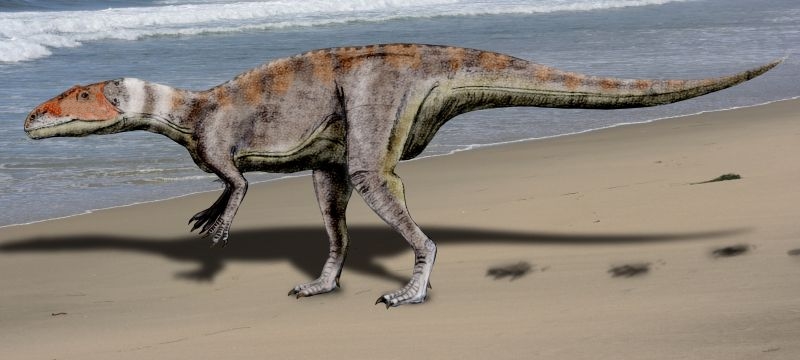
According to the ministry, the 167-million-year-old skeleton was found in 1994 at Conteville, in the Eure department, by André Dubreuil, then mayor of the village, after the first fragments surfaced on land he owned. Several excavation campaigns were then carried out by teams from the Centre de recherche en paléontologie, which is overseen by the MNHN, the CNRS and Sorbonne Université.
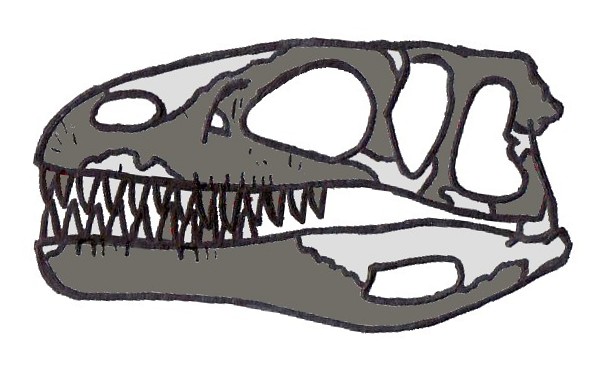
Studied for several years by MNHN palaeontologists, the animal — a theropod and close relative of the megalosaurs — was described as a new species and named in honour of its discoverer. The ministry’s release states that its skull is one of the most complete and best preserved of any theropod dinosaur in Europe, and that before its discovery almost nothing was known of the cranial and post-cranial anatomy of megalosaurs. It also describes the specimen as one of the last surviving witnesses of Normandy’s dinosaurs, the other specimens found in the region having been destroyed in the bombings of 1944.
From museum deposit to the auction room
In keeping with André Dubreuil’s wishes, the ministry says, the skeleton was first deposited in the MNHN’s collections from 1998, and had been on display at the Paléospace in Villers-sur-Mer (Calvados) since 2014. After the owner’s death, his heirs decided to sell it, and Millon announced its sale at Drouot. The regional outlet Tendance Ouest, reporting on 9 November, likewise stated that the specimen would enter the national collections and that its auction had been called off.
How the purchase was arranged
The negotiation was led by the Service des musées de France, part of the ministry’s Direction générale des patrimoines et de l’architecture, with support from the MNHN. It was financed by an exceptional grant from the Ministry of Culture’s Fonds du patrimoine and by financial support from the Direction générale de la recherche et de l’innovation of the research ministry. The agreement was reached with the auction house acting on behalf of the owners; the ministers thanked Millon for helping to make it possible. The press release does not disclose the price.
What happens next
The ministry says study of the specimen will continue, notably through CT-scan analyses of bone fibres and musculature, with a view to a new biomechanical mounting. The skeleton will join the collections of the Jardin des Plantes in the Galerie de Paléontologie et d’Anatomie comparée. The acquisition comes as the MNHN marks its 400th anniversary this year. No date for its public presentation in Paris has been announced.
Practical information: future home — Galerie de Paléontologie et d’Anatomie comparée, Jardin des Plantes, Muséum national d’histoire naturelle, Paris. Presentation date not yet announced. The 18 November sale at Drouot will not include the specimen.
Sources: Ministère de la Culture, press release (9 November 2026); Tendance Ouest, 9 November 2026.
This article was prepared with AI assistance and reviewed by the Honargardi editorial team.