
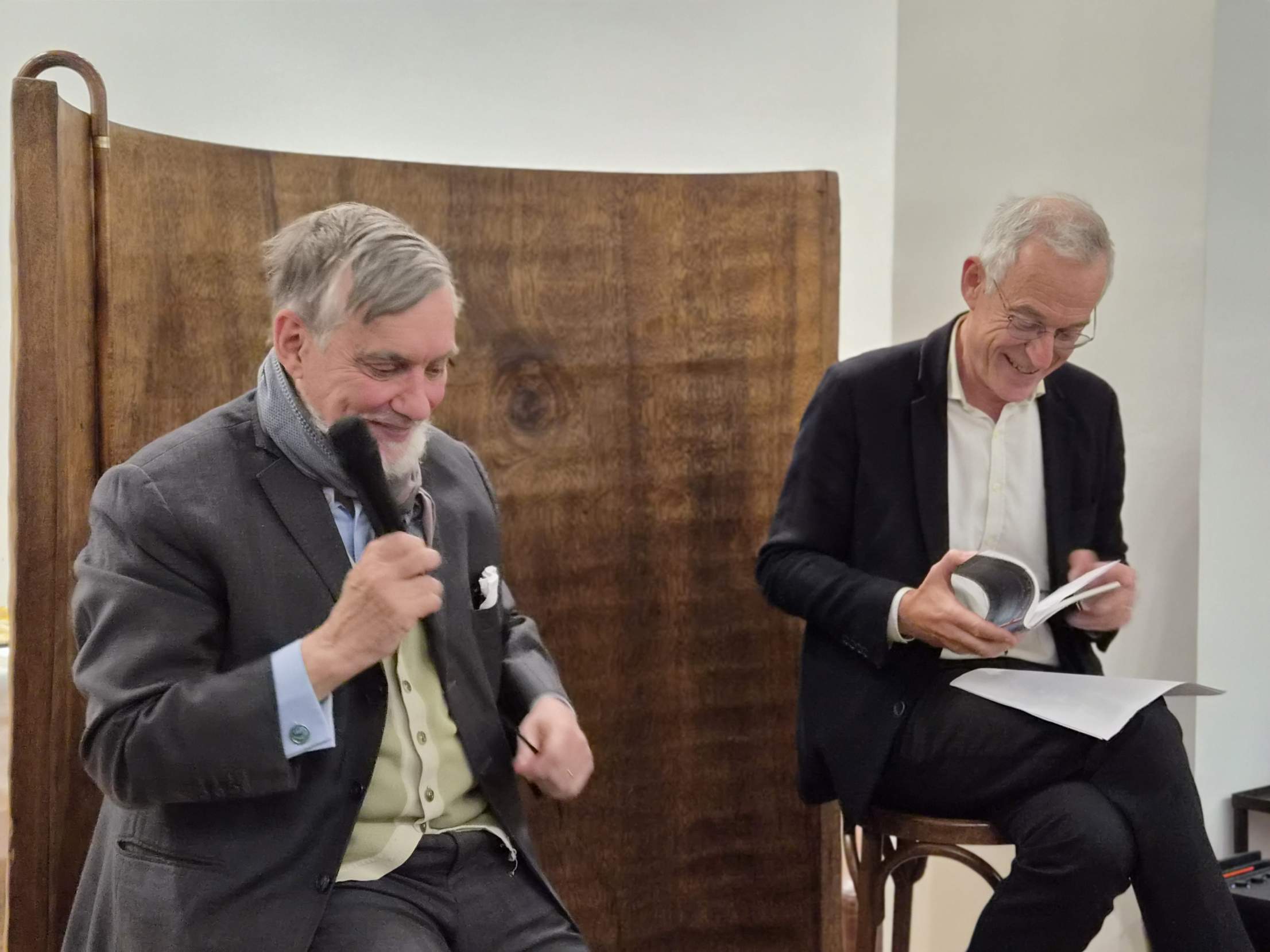
On Wednesday 18 November 2026, at 7 p.m., a meeting-and-signing evening was held at 17 rue de Verneuil in Paris for François Sureau’s L’heure française (Gallimard), the third volume of the series Les aventures de Thomas More. Sureau, a member of the Académie française, spoke for about half an hour with Étienne de Montety, director of Le Figaro littéraire. Honargardi attended and recorded the conversation; the quotations below are translated from the French.
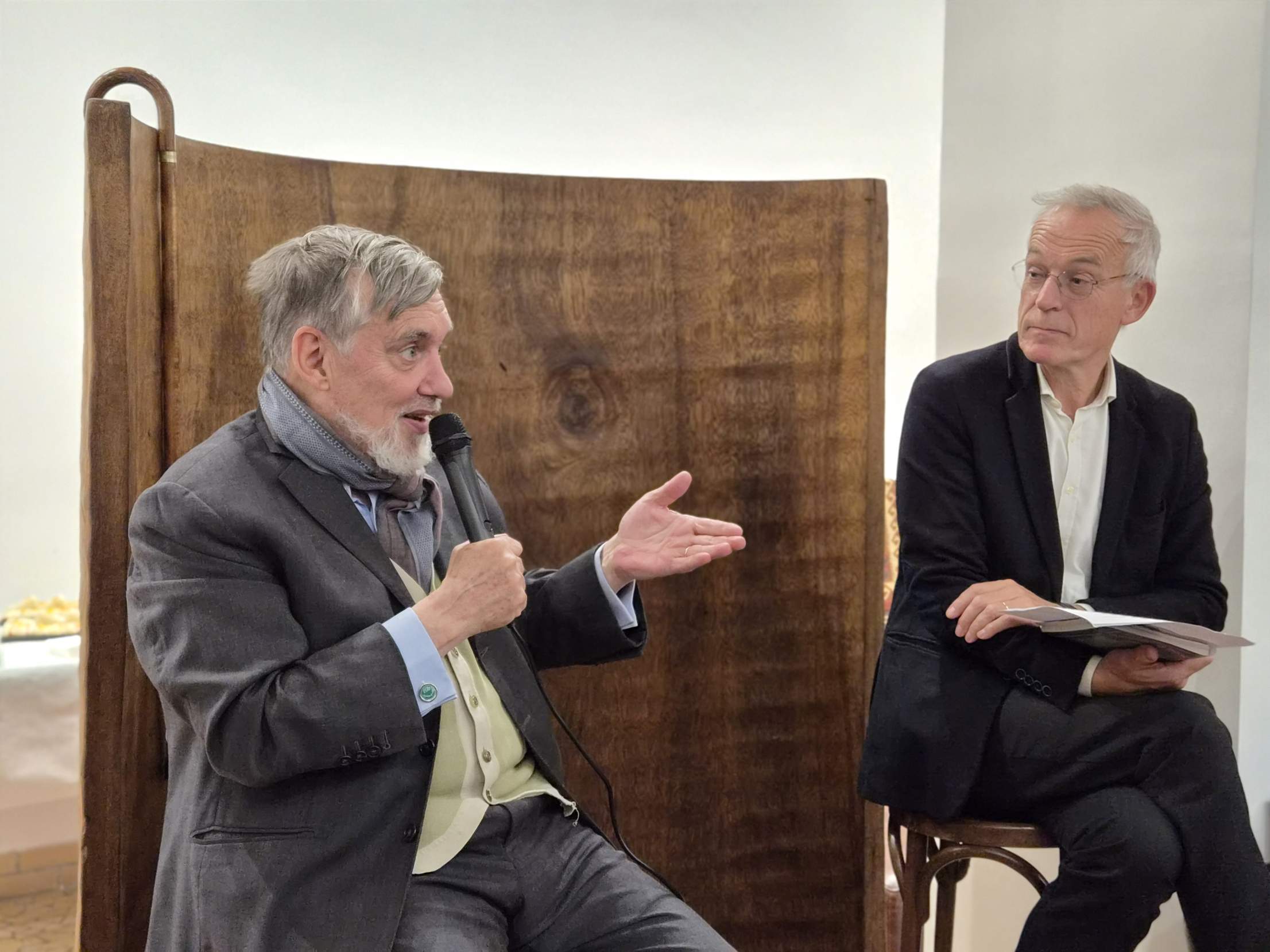
The novel
L’heure française is set in May 1940, as France faces defeat. According to the publisher’s back-cover text, an archivist is found dead in the attic of the Ministry of Foreign Affairs, among files the administration is destroying before the enemy arrives. As the exodus throws millions of civilians onto the roads, Thomas More, a commissaire at the Sûreté, is called in to investigate this singular case at the Quai d’Orsay; he is soon joined by Aspirant Seligmann, a young airman wounded in combat. The first two volumes, Les enfants perdus and Loin de Salonique, are set around Sedan in 1870 and in 1913. The third was published by Gallimard on 5 November 2026.
Writing the books he would like to read
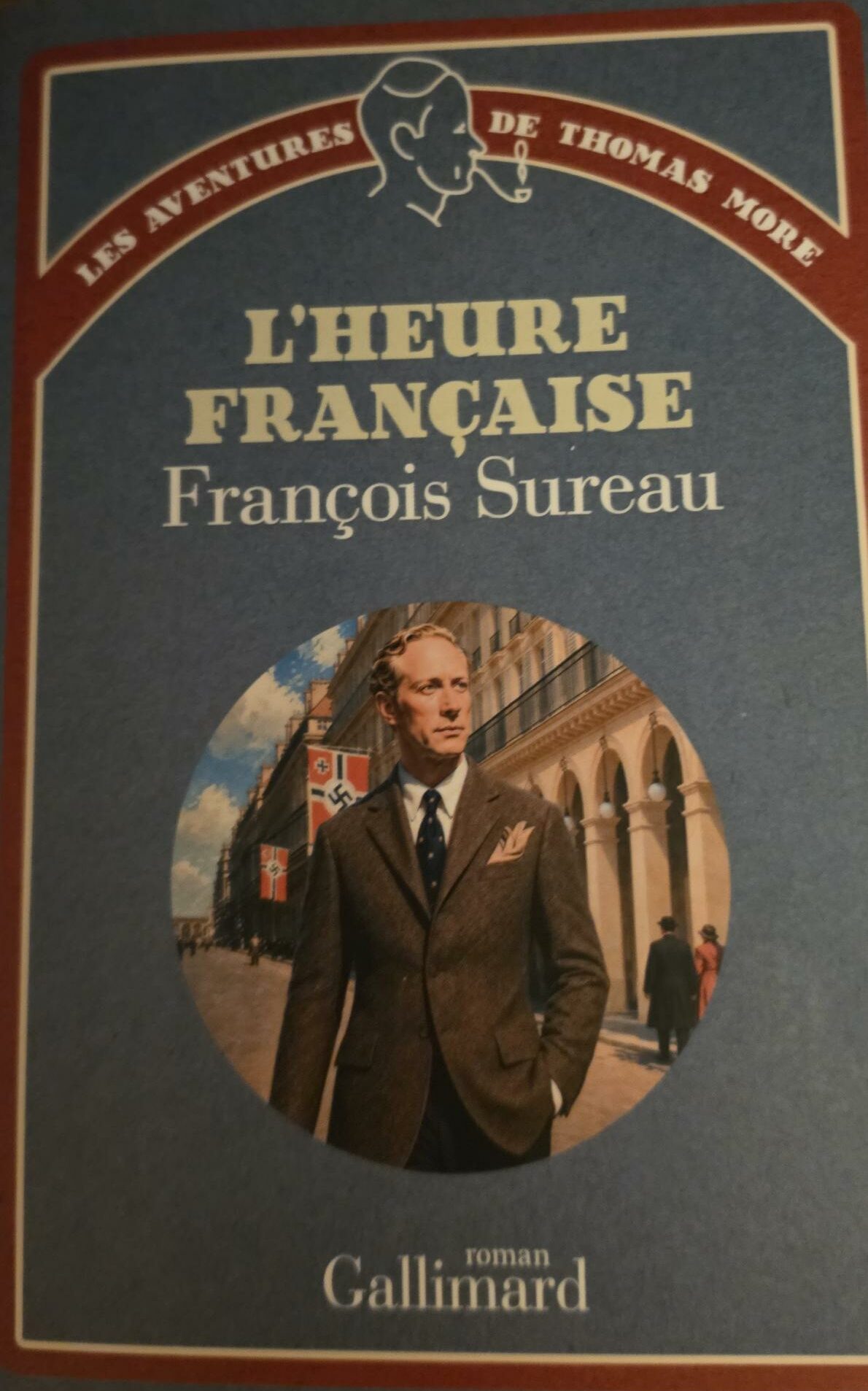
Sureau began with a confession: “there comes a time, as age advances, when one wants to write the books one would like to read.” Having given up on being Proust or Joyce, he said, he went back to what he had loved most in literature, Arsène Lupin and Alexandre Dumas, and decided to write the books that had enchanted him when he was young.
He built his hero piece by piece. The physique, visible on the covers, is that of the actor Leslie Howard, whom Sureau recalled above all in The Scarlet Pimpernel; and he made him English because, he joked, “a good detective is English, like a good parliamentarian.” Then came the pairing, on the model of Sherlock Holmes and Watson or Hercule Poirot and Captain Hastings, and a problem: More crosses the centuries and is therefore immortal, so his companion cannot be. Sureau invented a family that, generation after generation, produces a descendant who becomes More’s factotum, so that one of the two is always immersed in time while the other steps out of it, which keeps the reader inside the system.
What kind of man is More? “A Frenchman with an English air, speaking more or less fluently all the languages of the earth,” Sureau said. Not the devil, he added, recalling Verlaine’s remark that the devil speaks Italian with a slight Russian accent, and not the Wandering Jew, a legend he does not care for. He is a policeman, an imperial commissioner in 1870 and a Sûreté commissioner in 1940, who is called in to investigate. Moving through time also allows encounters: near Sedan, More talks with a dishevelled young man on his way to Paris who, at parting, introduces himself as Jean-Nicolas Arthur Rimbaud; in the Salonika volume he meets Ben-Gurion, who was in the city in 1913.
Truth, not justice
The interviewer suggested that More is driven by something other than justice. Sureau agreed: “what interests him is the truth, not justice.” He compared this to Columbo, where the case ends the moment the culprit is cornered, and to Simenon’s Maigret, who has little love for prosecutors, judges and lawyers; the story stops just before them. For a novelist, he said, the appeal of the detective story is that the investigation reveals the truth hidden behind appearances: the life of the victim, the lives, interests and passions of the suspects. The crime becomes a lever that exposes a large part of reality, “a form of novelistic realism.”
More, he added, has a mystical side. He believes that nobody can judge his fellow man or know what is in another’s heart; he untangles the skein of passions and restores a truth that had temporarily ceased to exist, but never goes further. “I don’t like venturing into those depths,” he says whenever he is asked why the culprit acted.
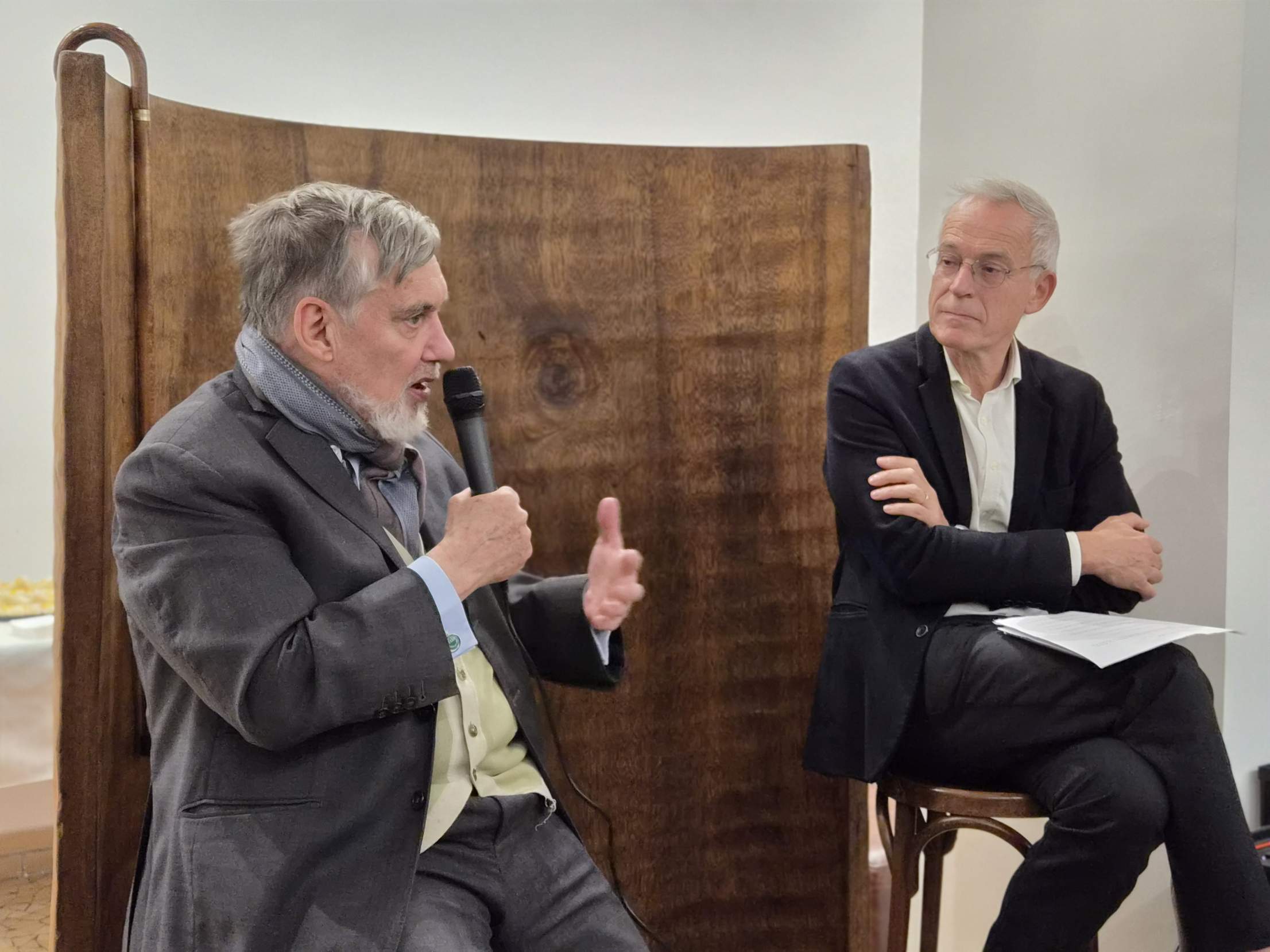
The detective’s art, Sureau said, resembles watercolour: “a good watercolour is an art in which it is the white that makes the composition leap out.” It is the skill with which blanks are handled that gives the landscape its relief, and a detective novel fails when it has no blanks, when every suspect is examined in turn and no uncertainty remains. Some great crime novels, he added, leave us forgetting how the culprit was found: what stays with us is the atmosphere and the idea that evil does not triumph in the end. “When you read a great detective novel, you are not reading a game of chess.”
Three crimes in the collapse of 1940
As in classical Chinese crime fiction, Sureau said, there are always three murders and three intertwined plots, which lets him describe the landscape of an era. Here they unfold between the beginning of the war and the débâcle. To evoke the sound of those weeks he recited from memory passages of Marshal Pétain’s message announcing the request for an armistice and alluded to the appeal of 18 June. He gave two reasons, both personal, for his fascination with the period. In Yugoslavia during the war he saw how little it takes for order to disintegrate: “it takes next to nothing for everything to disappear and for barbarism to return.” And he believes that principles, too, can vanish very quickly, something he said he has witnessed in France over the past twenty years.
Without giving away the solutions, he described the three anecdotes on which the plots are built, each meant to illustrate a form of historical decline, as he told them:
- The “piqueuses d’Orsay.” Nurses of the military hospital at Orsay gave lethal injections to wounded men to spare them from the Germans; tried in 1942, they were defended by Maurice Garçon and acquitted. For Sureau the case shows the disappearance of the elites and of the principles of those who govern.
- The Raven of Tulle. A real affair in which a woman sent anonymous letters to the notables of Tulle, revealing their secrets to one another: a first figure of denunciation, which Sureau links to the denunciations of the war years.
- Improvidence. In May 1940 Admiral Canaris, head of the German military intelligence service, warned the French consulate general in Berne that the Wehrmacht would pass through the Ardennes. The message reached Colonel Rivet, who ran the French intelligence service; the chief of the general staff dismissed it as one more false alarm. The third crime hinges on the need to eliminate the man who thought it was one.
The interviewer noted how present the medical world is in so short a book, and Sureau confirmed that part of the solution of one of the riddles rests on forensic medicine, “a very exciting field.”
A hero to admire
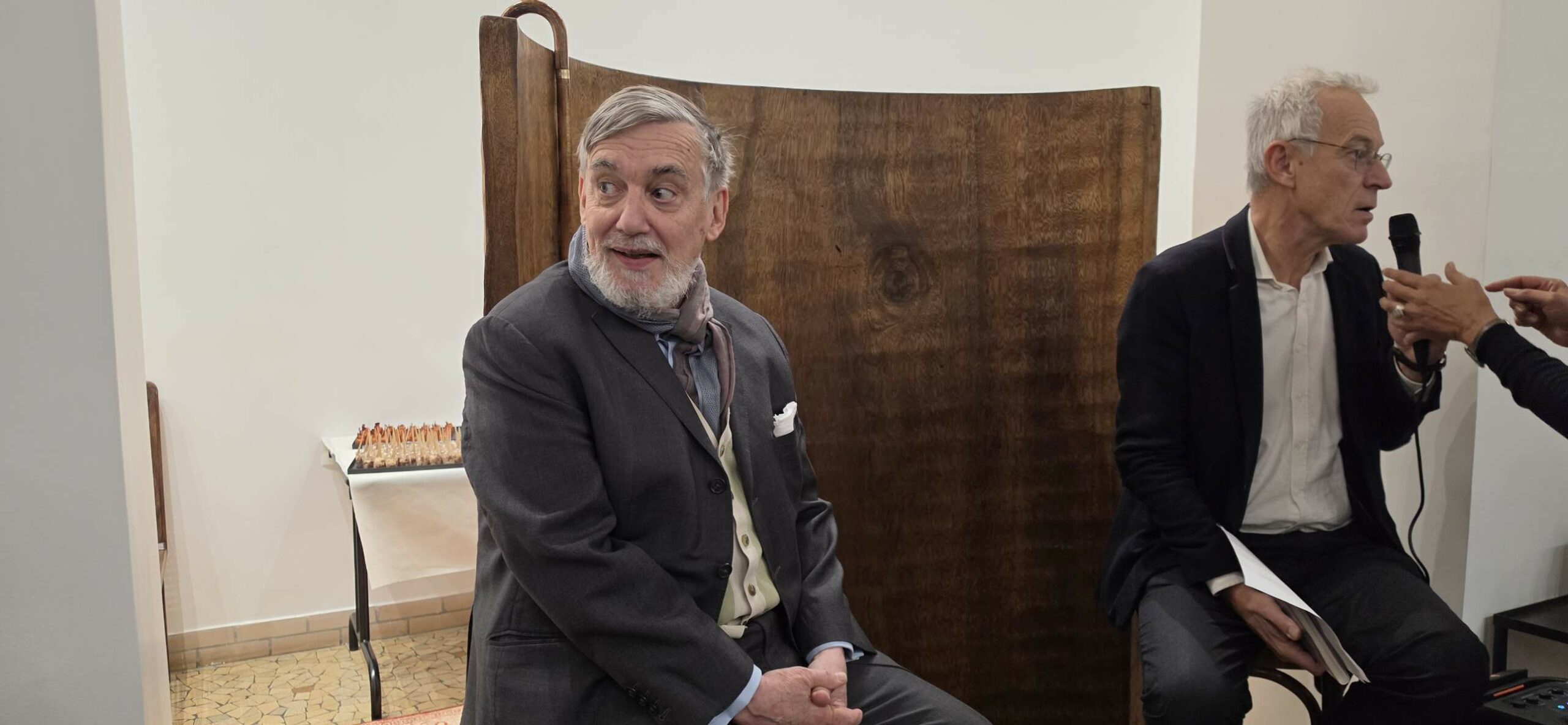
Is More God, or better, François Sureau himself? “Ah no, François Sureau is Seligman,” the author replied: the man who, generation after generation, follows the other. More, he said, “is everything I loved in the characters of literature, everything by which literature helps one to live,” in the line of Athos, Porthos and Aramis or the Count of Monte Cristo, characters who become fraternal, redemptive, enthralling. Writing him is also “an exercise in admiration.” Sureau tolerates Athos’s depression, Holmes’s cocaine and Poirot’s waxed moustache, “but not beyond”, and regrets that so many television series are spoiled by a hero who divorces, has a mad mother and quarrels with his sister, all things “absolutely antagonistic to the need to admire.”
He added a provocative view of the French novel, which in his opinion rests on one thing, the crossing of appearances, whether metaphysical or social; since France has become “one gigantic middle class,” he argued, that idea has faded, and with it much of the novel. What interests him in More is that he is, by essence, the character who can cross appearances even more than he crosses time.
How many volumes?
Asked whether More might take over his creator, as Arsène Lupin did with Maurice Leblanc, Sureau said he would love it: “it’s just a question of copies sold. Make me reach 200,000 and I am quite ready to give up writing L’Éducation sentimentale.” He recalled how Conan Doyle, tired of Sherlock Holmes, had him die at the Reichenbach Falls, and how crowds then gathered outside the offices of The Strand Magazine until Holmes was brought back. “I am ready to give up being Faulkner or James Joyce,” he said, “if I manage to know that kind of glory in my lifetime.”
Footnotes in the book allude to later episodes, up to a seventeenth; since this is the third, the interviewer remarked, “we still have fourteen to wait.” Sureau replied that two further novels are ready and that he already enjoys listing titles, such as Le mandarin du bout du monde, a reference to the classic moral dilemma of whether to kill a stranger on the other side of the world for personal gain. One of the two finished books is set in Hungary and is due next year, the other in India in 1830.
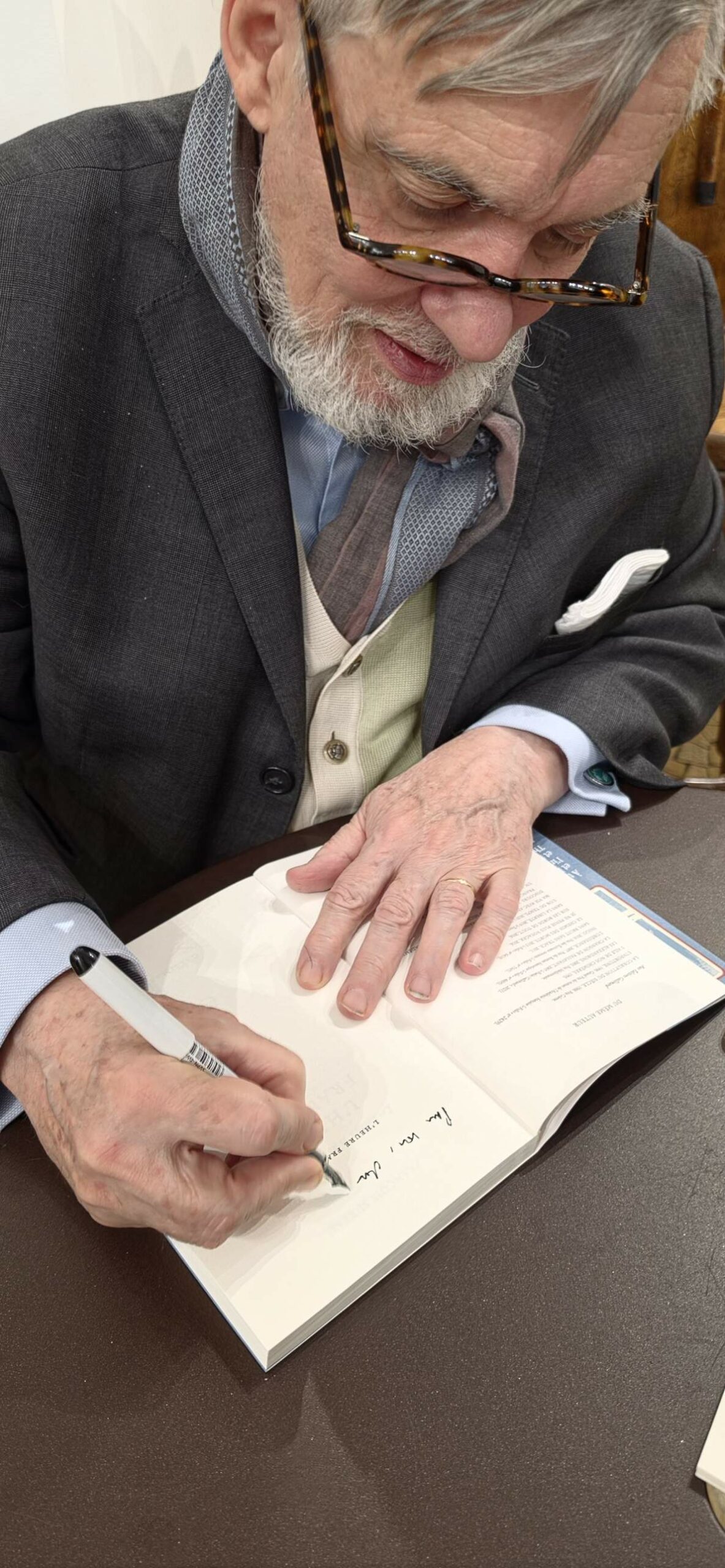
After the conversation, Sureau signed copies of the book for the guests, among them, as he pointed out from the stage, the filmmaker Amos Gitai.
Practical Information
Event: meeting and signing evening for L’heure française
Date: Wednesday 18 November 2026, 7 p.m.
Address: 17 rue de Verneuil, Paris (as shown on the event poster; the name of the venue is not stated on it)
Book: François Sureau, Les aventures de Thomas More: L’heure française, Gallimard (collection Blanche), 5 November 2026, 160 pages, €18, ISBN 978-2-07-308672-3
About François Sureau
François Sureau, born in Paris, trained at the ENA and served as an auditor at the Conseil d’État before becoming a lawyer and a writer. He was elected to the Académie française in 2020 (seat 24, succeeding Max Gallo) and received on 3 March 2022. Les enfants perdus, set around Sedan in 1870, and Loin de Salonique, set in 1913, are the first two Thomas More novels.
Sources: Honargardi’s recording of the conversation (18 November 2026); the event poster; publisher’s summary and details as listed by Librairie Dialogues and Mollat; French Wikipedia (François Sureau); L’Éclaireur Fnac (first two volumes); Wikipedia (Étienne de Montety).