
From 24 November 2026 to 16 May 2027, the Institut du monde arabe (IMA) in Paris presents “Les secrets de l’Alhambra” (The Secrets of the Alhambra), an exhibition devoted to the Granada palace complex as it was built by the Nasrid sultans, at the height of its splendour under Sultan Muhammad V in the 14th century.
The IMA describes the Alhambra as a jewel of Islamic art, the only Muslim palace complex preserved in the West and one of the most visited monuments in the world. Its stated subject, however, is not the fortress that visitors see today, which the institute says is very different, but the Nasrid palace. The institute describes the exhibition as an immersive walk punctuated by works of art.
A fortress before a palace
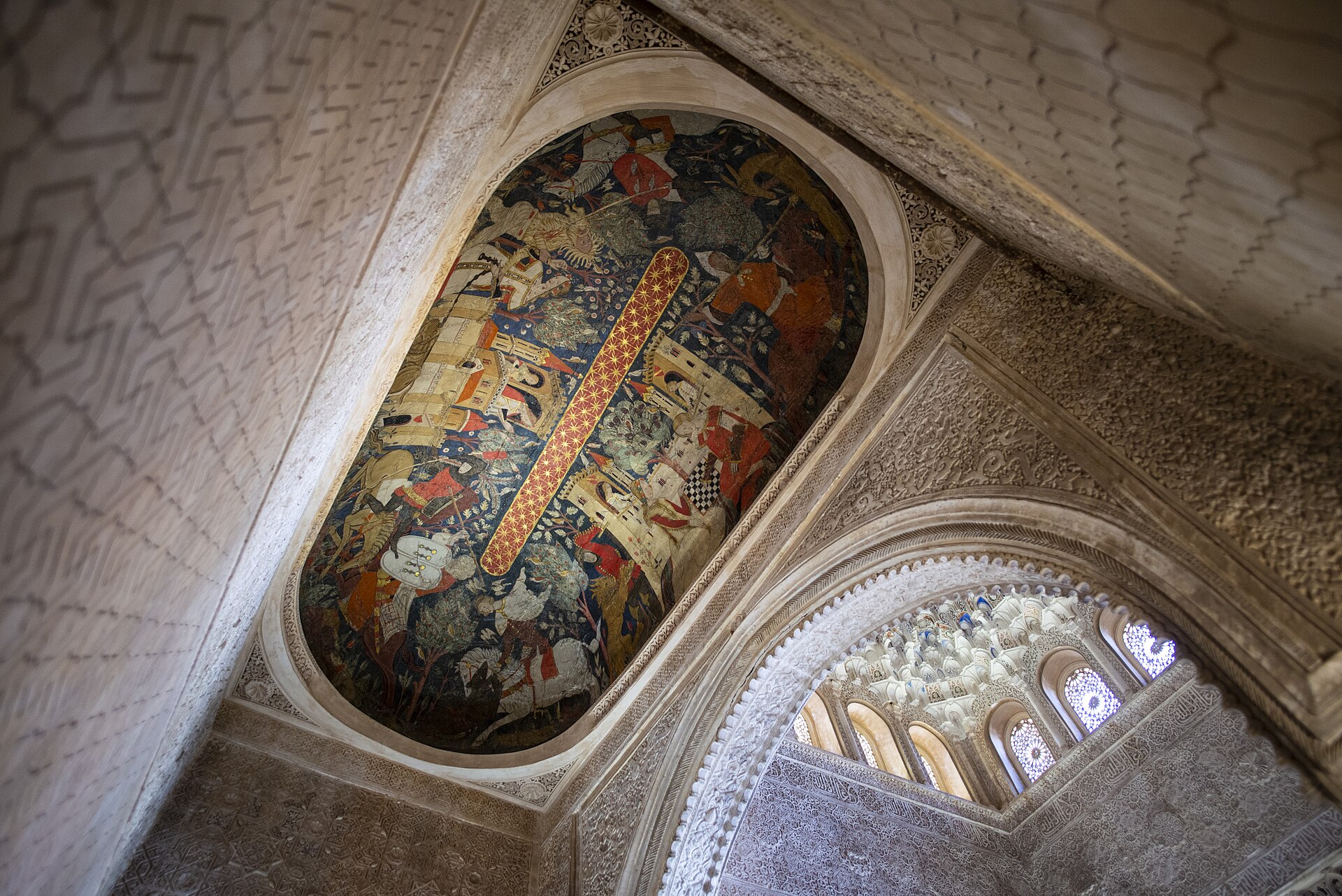
According to the institute’s presentation, the show begins from a reminder that the Alhambra was first of all a fortress, enclosed by walls and towers and home to a garrison, and that the Nasrid emirate was a state under constant pressure from its neighbours. A selection of weapons and pieces of armour and harness is shown alongside what the IMA calls a hidden and little-known masterpiece of Arab painting, depicting the return of a victorious military expedition.
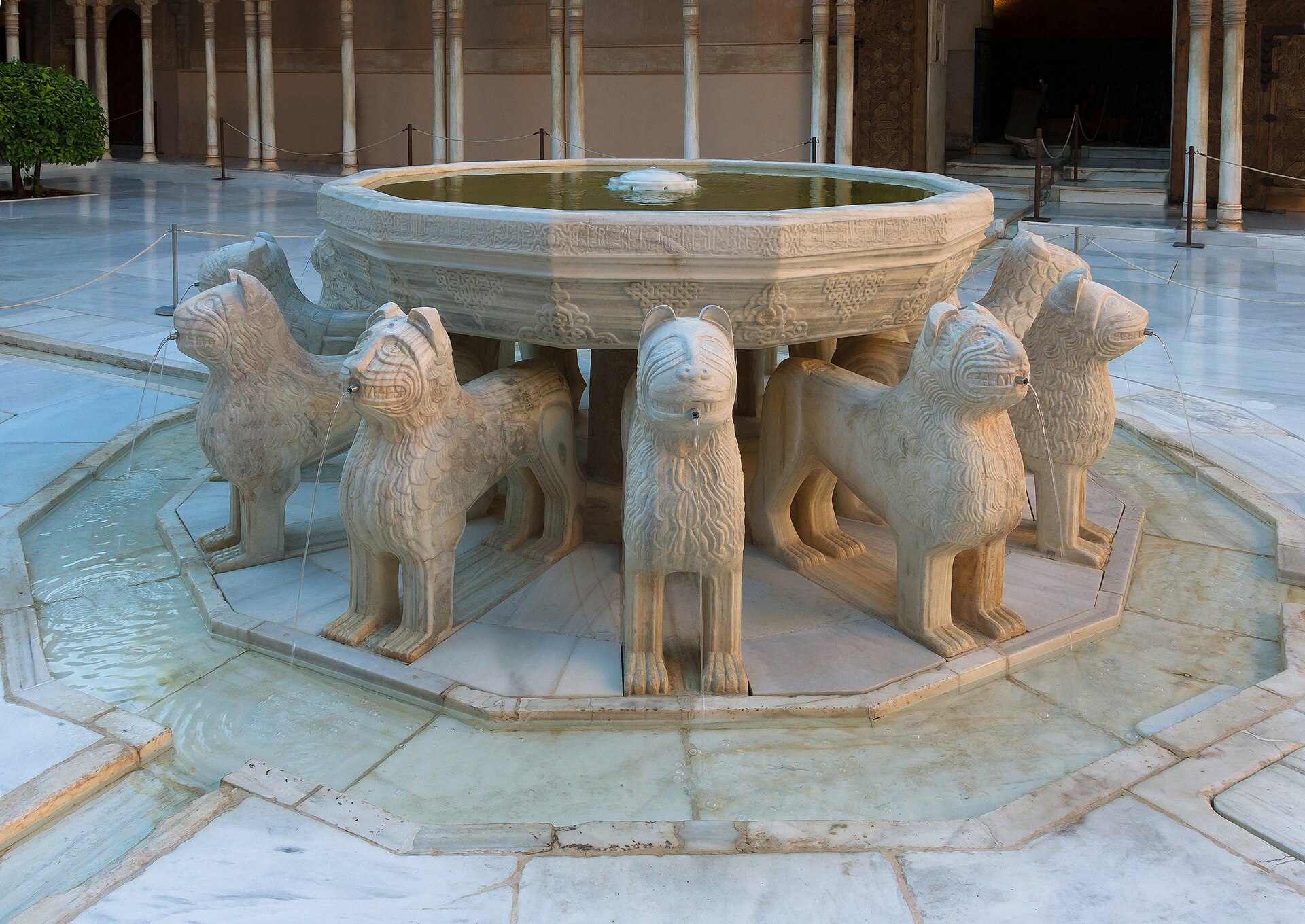
The Fountain of the Lions
A major piece of the exhibition, according to the IMA, is a copy of the Fountain of the Lions, which the institute calls the Alhambra’s most iconic piece and which was installed under Muhammad V and altered in the centuries that followed the Christian conquest. Around this copy, visitors are introduced to different scientific hypotheses about the fountain’s meaning, form and functioning as it was in Muhammad V’s time. The section also deals with the importance of water for the whole palace complex, both aesthetically and as a condition of life on the site.
Geometry, colour and inscriptions
One part of the exhibition is dedicated to the geometric patterns on which the decoration is built, and to how they were drawn, across different media: ceramic walls as well as silks, manuscripts, woodwork and marquetry. Immersive techniques are used to evoke the polychromy that, the institute notes, can only partly be seen today, with attention to the play of light on the ceiling of Lindaraja and to the detail of the muqarnas and ceilings.
The IMA describes the inscriptions that cover the walls as, quite literally, the voice of the palace. Visitors are invited to discover the different types of calligraphy and to read mottos, the word baraka, poems and Quranic quotations within the ornament, with audio recordings of their reading. The exhibition also sets out to decode the paintings of the Hall of the Kings, whose iconography the institute describes as surprising in a Muslim palace, and to show artistic exchanges with both the Christian and the Islamic worlds.
Festivities and gardens
To evoke the court festivities described in historical sources and poetry collections, the IMA announces a reconstruction of the automaton presented at the celebration of the mawlid (the Prophet’s birthday) in 1362. The route ends with a garden installation created for the exhibition, based on scientific knowledge of the Alhambra’s gardens and designed to appeal to hearing and smell.
Curators and partners
The exhibition is curated by Barbara Boloix of the University of Granada and Agnès Carayon, exhibitions officer at the IMA. It is produced with Gédéon Expériences and was conceived with the support of the Patronato de la Alhambra y Generalife, with the exceptional participation of the Bibliothèque nationale de France. The institute’s page does not give the number of works on display. Among the events around the exhibition are two screenings: Marc Jampolsky’s documentary “Alhambra, le trésor du dernier sultanat d’Espagne” on 26 November and Youssef Chahine’s “Le Destin” on 27 November 2026.
Practical information: “Les secrets de l’Alhambra”, Institut du monde arabe, 1 rue des Fossés-Saint-Bernard, 75005 Paris, exhibition rooms on levels 1 and 2. 24 November 2026 – 16 May 2027. Tickets: €17 full price, €15 reduced, €9 for ages 12–26, free for under-12s.
Sources: Institut du monde arabe, “Les secrets de l’Alhambra” (official exhibition page); Sortiraparis, exhibition listing (updated 2 November 2026).
This article was prepared with AI assistance and reviewed by the Honargardi editorial team.