
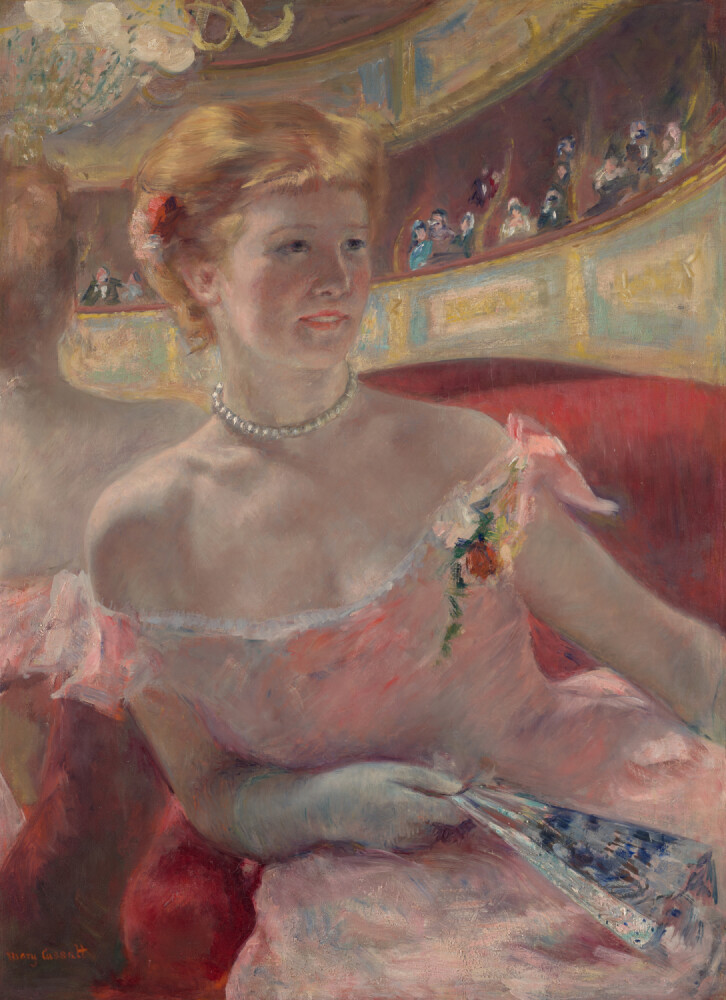
For a painter who lived in France for some six decades and exhibited four times with the Impressionists at Edgar Degas’s invitation, Mary Cassatt (1844–1926) has had a strangely faint presence in French national museums. That changes today. On 6 October 2026 the Musée d’Orsay opens Mary Cassatt. L’indépendante, which the museum describes as the first major exhibition France’s national museums have ever devoted to her. It runs until 31 January 2027 and marks the centenary of her death.
The gap is real. Orsay’s own archive lists only one earlier show under her name: a 1988 presentation, organised with the Bibliothèque nationale, centred on her graphic work. Nearly four decades on, the museum is attempting something far more ambitious — close to 80 paintings, pastels and prints spanning her entire career, including rarely shown works from European public and private collections and American loans seldom seen outside the United States. The curators also draw on previously unpublished letters.
Installed on level 0, in the museum’s main exhibition space, and mounted with the exceptional participation of the Bibliothèque nationale de France, the exhibition will then travel to the National Portrait Gallery in London (4 March – 6 June 2027) and the Museum of Fine Arts, Boston (7 July – 28 November 2027).
Independence as a method
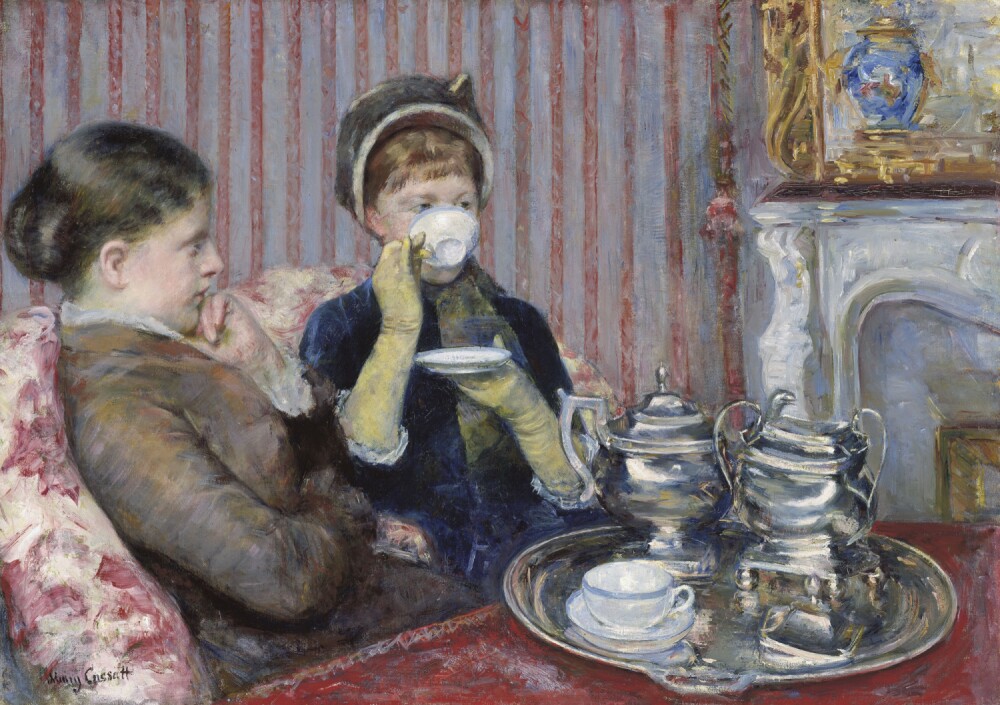
The organising idea is in the title. Cassatt called herself independent and said she could live alone and loved to work; the exhibition takes her at her word, reading her career through that principle rather than through the “mother and child” label that has long followed her. It is a useful corrective. Those scenes of mothers and children were, as Orsay points out, also a market strategy — a genre in strong demand that she mastered and sold, alongside commissioned portraits. Seen this way, the subject that once seemed to confine her becomes evidence of professional acumen.
Equally important is her role as an adviser to American relatives and friends who were building collections, Impressionist pictures among them. That thread matters for anyone trying to understand how so much French painting of the period came to hang in American museums. Cassatt was not only a painter inside the movement; she was one of its channels across the Atlantic.
The lost mural and the suffrage room
Two sections promise the most new ground. The first concerns Modern Woman, her monumental decoration — roughly 4 by 18 metres — for the Woman’s Building at the 1893 world’s fair in Chicago, the largest commission of her career and now lost. Orsay evokes it through related prints and pastels and a film presenting a digital restoration. Her celebrated set of ten colour prints is reread in the same light, as part of an experimental phase tied to her progressive views on women’s education.
The final room turns to politics: a small group of paintings shown in the 1915 New York exhibition she organised with her friend Louisine Havemeyer in support of women’s suffrage. Ending there makes a clear argument — that Cassatt’s independence extended from her studio and her finances to public advocacy.
Why it matters now
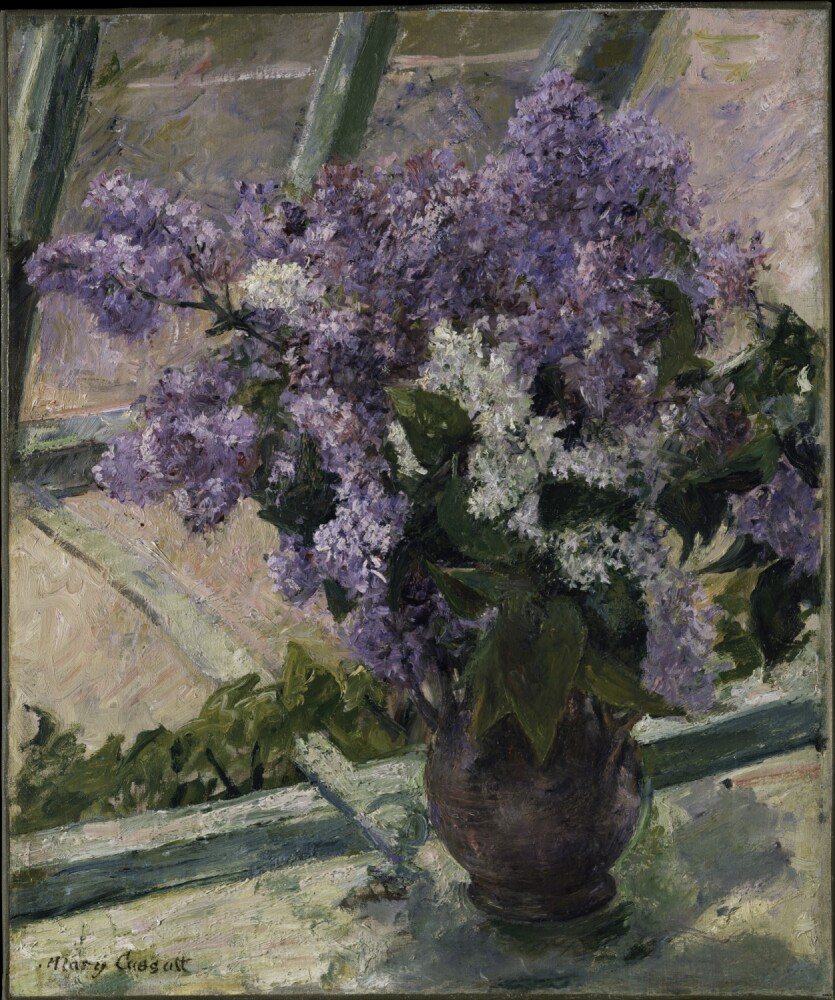
The exhibition is curated in Paris by Caroline Corbeau-Parsons and Anne Robbins of the Musée d’Orsay, with Sarah Moulden of the National Portrait Gallery, London, and Erica Hirshler of the Museum of Fine Arts, Boston. It belongs to Orsay’s 40th-anniversary programme, and the museum’s 2026 purchase of Cassatt’s Jeune fille au banjo (1894), which leads the exhibition page, suggests the institution intends more than a single season of attention.
For Honargardi’s readers the show raises a familiar question in a new setting: how institutions write women artists back into histories that always included them. In France, where Cassatt lived and worked for most of her life, the national museums’ first major tribute arrives a century after her death — and on the terms she chose for herself.
Mary Cassatt. L’indépendante — Musée d’Orsay, Paris, 6 October 2026 – 31 January 2027.
Source: Musée d’Orsay, official exhibition page
Press materials: Musée d’Orsay press room
This article was prepared with AI assistance and reviewed by the Honargardi editorial team.